



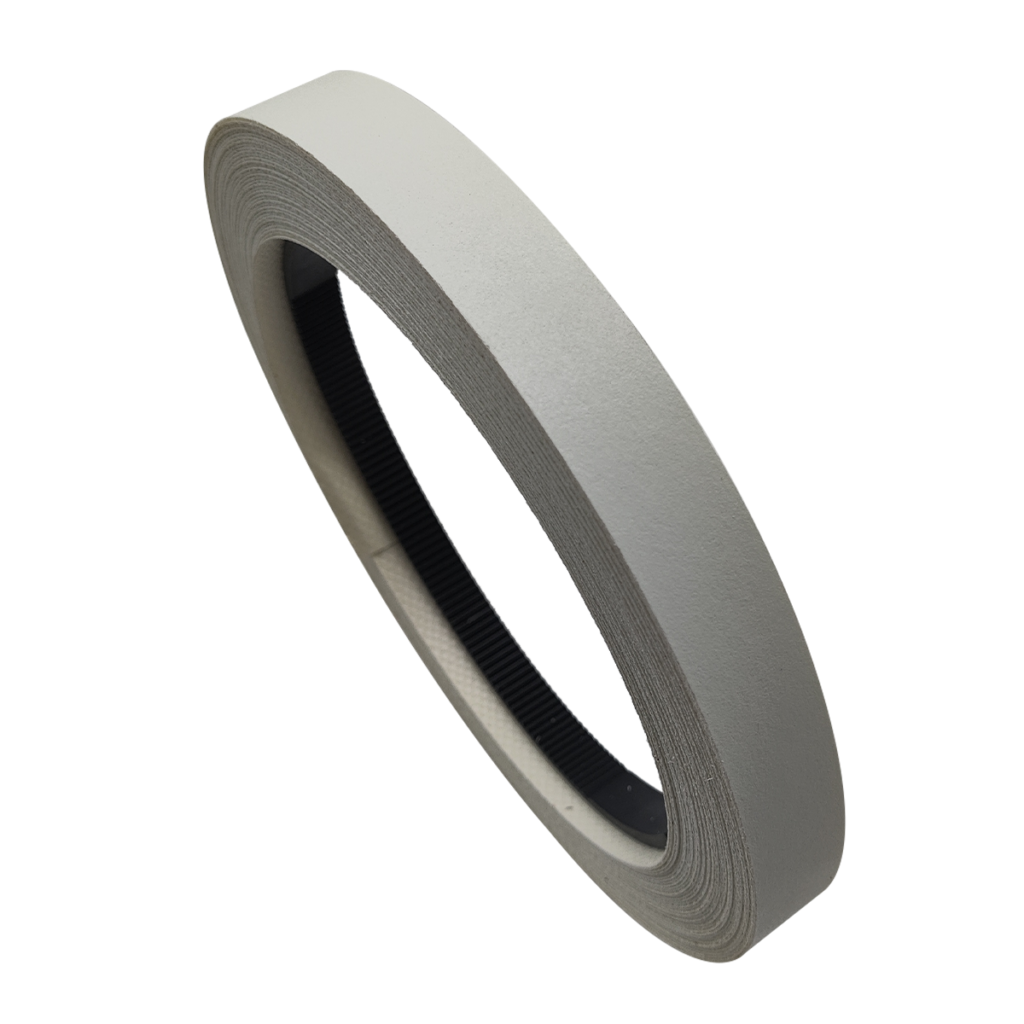
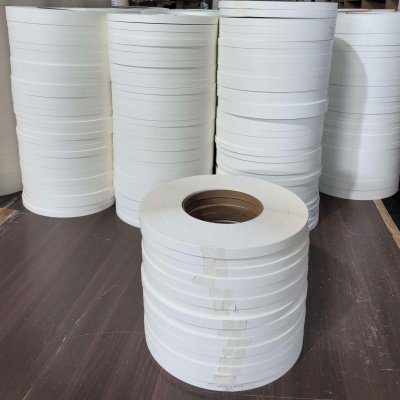
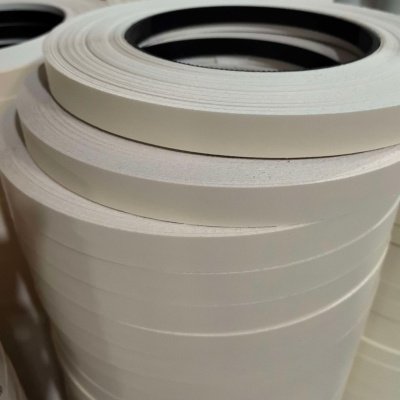
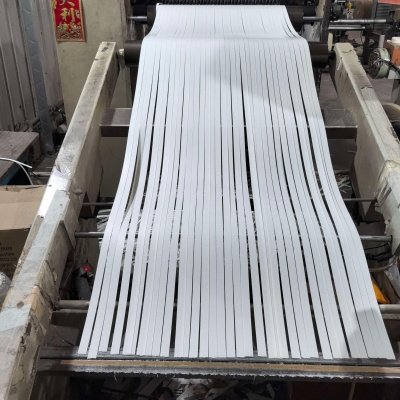
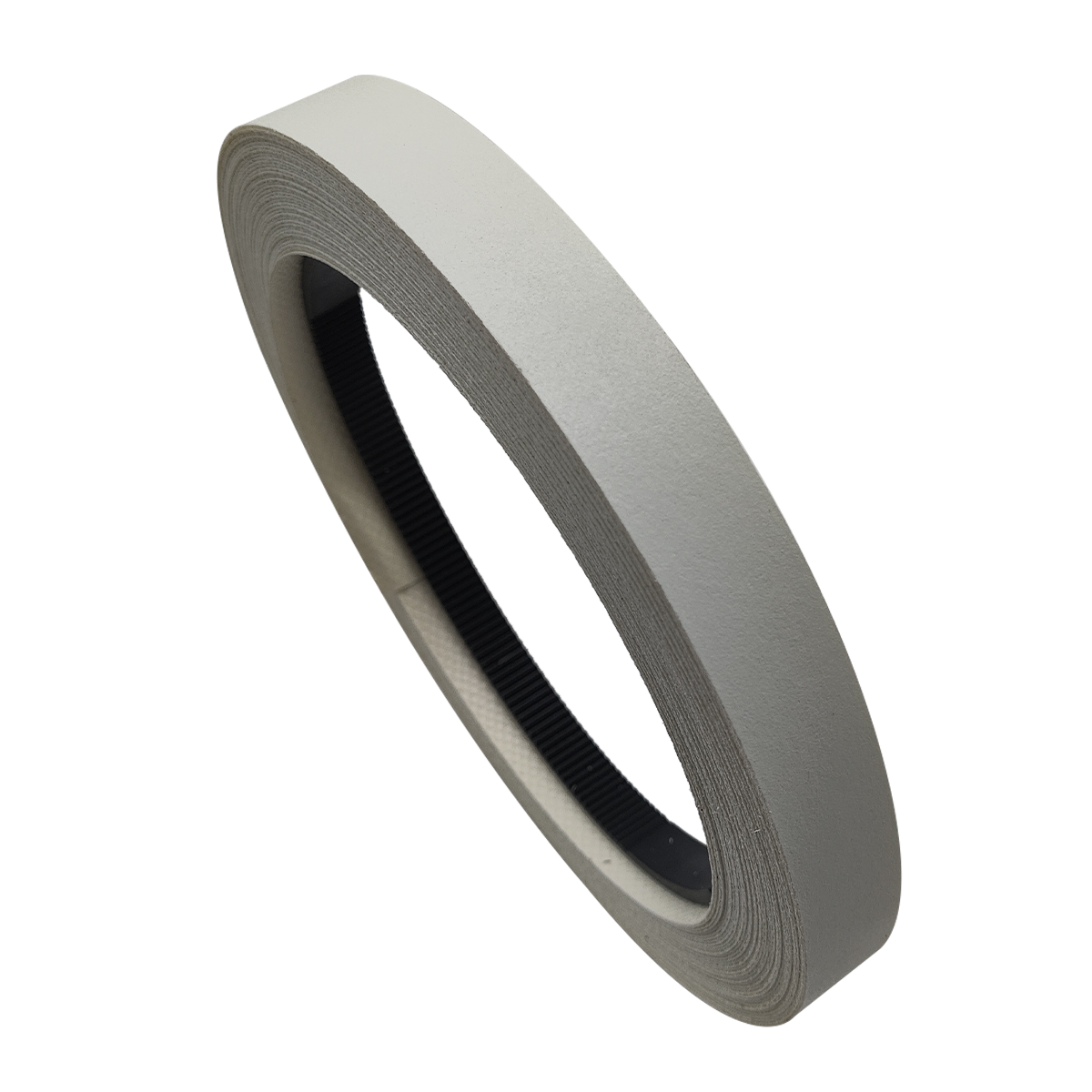
White Melamine Edge Banding
White Melamine Edge Banding — Pre-Glued, Exact Match for White Melamine Board
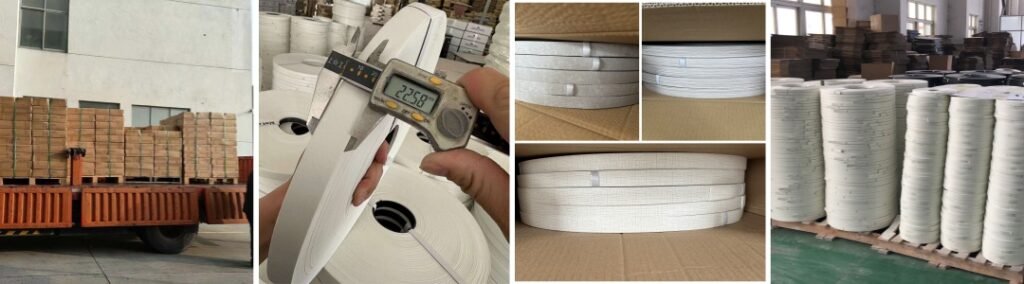
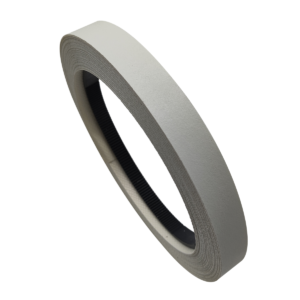
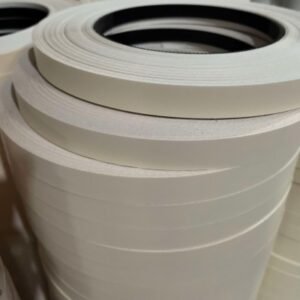
White melamine edge banding is a pre-glued edge strip made from melamine-impregnated paper, designed to edge white melamine-faced furniture panels. Because the edge banding and the board face are made from the same material — white decorative paper impregnated with melamine resin — the color, matte texture, and sheen match exactly from panel face to edge. There is no visible seam, no plastic sheen difference, no color shift under different lighting.
The edge banding comes pre-coated with hot melt adhesive on the back. It activates at 120–150°C on the edge banding machine’s heating station — no separate glue pot, no glue film adjustment, no glue temperature management. Total thickness is 0.5–0.6 mm including the adhesive layer.
Request White Melamine Edge Banding Samples→
Product Specifications
| Parameter | Specification |
| Product | White melamine edge banding, pre-glued |
| Material | Melamine-impregnated decorative paper |
| Total thickness (with adhesive) | 0.5 – 0.6 mm |
| Width range | 12 mm – 630 mm |
| Standard widths | 18, 22, 28, 32, 40, 45, 55, 65 mm |
| White tones | Pure white, warm white, cool white |
| Surface finish | Matte, matched to white melamine board |
| Pre-applied adhesive | Hot melt, 40–60 g/m² coat weight |
| Recommended line speed | 15 – 30 m/min |
| Heat resistance | 75°C continuous |
| MOQ | 10,000 m per color per width |
White Tones
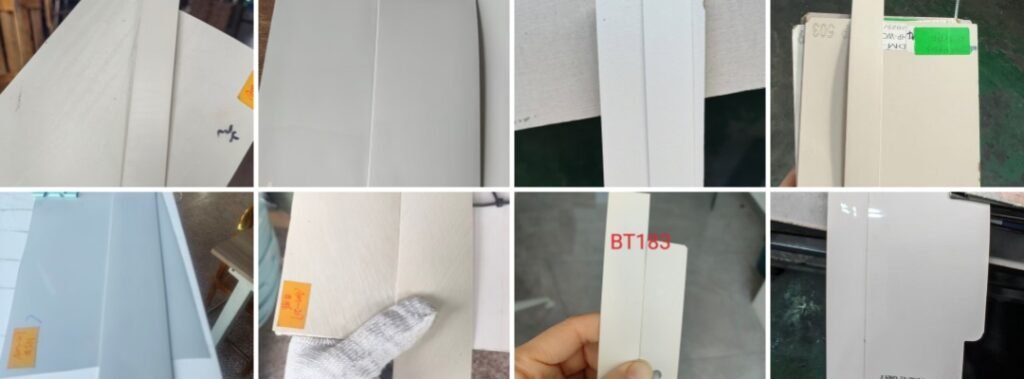
White is not a single color: different board manufacturers produce different white tones, and using the wrong white edge banding creates a visible mismatch even if both are called “white.” We produce three standard white tones and offer custom matching to your specific board.
Pure White: a neutral white with no warm or cool undertone. The most versatile white, matching the majority of standard white melamine boards used in residential and contract furniture.
Warm White: a light white with a hint of yellow/ivory. Warm white melamine boards are used in traditional and transitional furniture and matches with these boards.
Cool White:a crisp white with subtle blue undertones, sometimes described as brilliant white or cold white. Matches cool white melamine boards used in modern, minimalist, and high-gloss furniture lines.
Custom Color Matching: If your white melamine board does not match any of the three standard color tones above, please send us a sample board. We will measure it using a spectrophotometer under D65 (daylight), A (incandescent), and TL84 (fluorescent) light sources, and then produce a matching batch. Because the edge banding uses the same paper and resin system as the board, custom white matching always achieves an accuracy of ΔE ≤ 1.0—a higher degree of matching than any PVC edge banding.
Main Characteristics Of White Melamine Edge Banding
Exact color and texture match to white melamine board
White melamine edge banding is made from the same impregnated decorative paper as the white melamine board face. The white pigment, melamine resin, and matte surface texture are identical, so the edge reads as a continuation of the panel rather than a separate strip. PVC edge banding can be color-matched to white, but it has a plastic surface that never matches the subtle matte texture of melamine — and under showroom lighting, the sheen difference becomes visible.
Pre-glued for simple, consistent application
Every roll of white melamine edge banding comes with hot melt adhesive already applied to the back at a controlled coat weight. On the edge banding machine, a heating station activates the adhesive at 120–150°C. There is no glue pot to fill, no glue film thickness to calibrate, no glue temperature to monitor — and no glue pot to clean. The adhesive layer is consistent from the first meter of the roll to the last, so bond quality does not drift during a production run.
Thin profile for a nearly invisible edge
At 0.5–0.6 mm total thickness including adhesive, white melamine edge banding is thin enough that after application and trimming, the edge is nearly flush with the panel face. There is no raised lip, no rounded profile — just a clean, flat transition from panel face to edge. This is the preferred look for modern flat-panel furniture where the edge should disappear.
White color that stays white
The white pigment in our melamine edge banding is UV-stabilized to resist yellowing under prolonged light exposure. White furniture that yellows at the edge after six months on display or near a window looks old before its time — our edge banding maintains the original white tone for the service life of the furniture.
PVC-free and recyclable
White melamine edge banding is paper-based, not plastic. It contains no PVC, no chlorine, no plasticizers, and is recyclable with paper waste. For furniture brands with sustainability commitments or green product lines, this is the white edge material that supports those claims without a cost premium.
How to Use White Melamine Edge Banding?
White melamine edge banding runs on any standard automatic edge banding machine equipped with a heating station or hot air unit for pre-glued edge banding.
Machine setup:
- Heating station temperature: 120–150°C (activates the pre-applied adhesive)
- Pressure roller: 0.2–0.3 MPa (lower than PVC — the thin material conforms easily)
- Line speed: 15–30 m/min
- Trimming: standard carbide cutters, no special radius cutters needed
- Pre-milling: not required — a clean saw-cut edge is sufficient
Important: If your machine has a glue pot, turn it off when running pre-glued melamine edge banding. The heating station alone activates the adhesive. Running both the glue pot and the heating station will apply too much adhesive and cause squeeze-out.
Preparing panels:Make sure that the edge of the panel is clean and free of sawdust. Panels should be at room temperature (above 15°C) – cold panels may cause the pre-applied adhesive to set too rapidly before complete bonding.
Bond verification: Once test panels are run, a peel test is done by separating the edge banding from the panel. A good bond will fail at the paper fibres of the edge of the panel (fibre-tear failure). If the edge banding is sticking, the temperature of the heating station is too high, or the heating panel is too cold.
Get Setup Parameters for Your Machine→
Applications
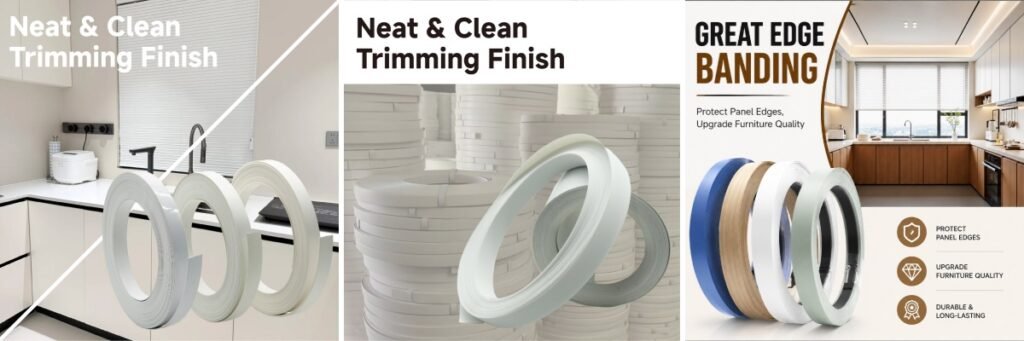
White melamine edge banding is used wherever white melamine board is edged — primarily internal and high-volume furniture components:
- Kitchen cabinet carcasses— sides, backs, shelves, and interior components of white kitchen cabinets
- Drawer boxes— drawer sides, backs, and bottoms in white kitchen and wardrobe systems
- Wardrobe interiors— shelves, dividers, and hanging components inside white wardrobes and closets
- Office furniture internals— white storage units, drawer interiors, and cabinet carcasses
- Bedroom furniture— internal components of white dressers, chests, and wardrobes
- Bookshelves and shelving— white melamine shelf edges and vertical dividers
- TV units and media consoles— back panels and internal shelves
- Wide white panels— full-height white panels and wide shelving up to 630 mm width
White melamine edge banding is intended for internal and low-impact components. For visible white edges that take contact — such as cabinet doors, drawer fronts, or desk edges — use white PVC or ABS edge banding at 1 mm or thicker for impact resistance.
Quality and Consistency
Every roll of white melamine edge banding is inspected before shipment:
- Color check— spectrophotometric measurement against the retained white standard, ΔE ≤ 1.0
- Thickness check— total thickness including adhesive, ±0.05 mm
- Width check— ±0.1 mm, verified at multiple points along the roll
- Adhesive coating check— uniform coat weight, no skips, no dry spots
- Surface inspection— no stains, tears, wrinkles, or resin spots
- Bond test— sample activated and bonded to white melamine board, peel tested for fiber-tear failure
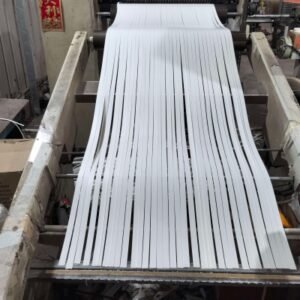
- Roll quality— no joints, consistent tension, clean slit edges
Certificates of Analysis available on request. Retained samples stored 12 months for batch traceability. ISO 9001 certified facility, REACH compliant.
Ordering and Samples
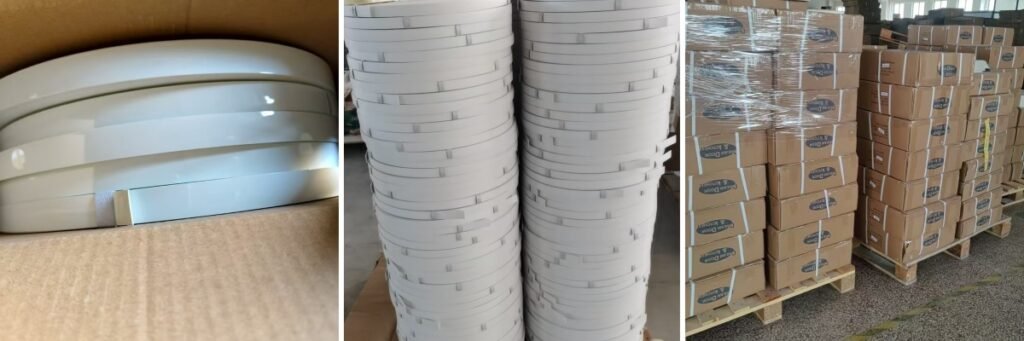
Samples: 1–2 meter sample rolls of any white tone, free of charge. Customer covers shipping. Dispatched within 3 working days. Include your white melamine board sample for a verified color match.
MOQ: 10,000 m per color per width.
Lead time: Stock white tones and standard widths — 3–5 working days. Custom production — 7–15 working days. Custom white match first batch — 15–20 working days.
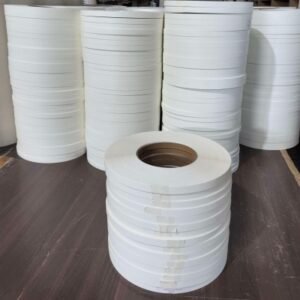
Packaging: Each roll individually boxed and labeled with white tone, thickness, width, roll length, and batch number. Palletized for container shipping.
Frequently Asked Questions
What is the difference between white melamine edge banding and white PVC edge banding?
White melamine edge banding is paper-based, pre-glued, 0.5–0.6 mm thick, and matches white melamine board exactly in color and texture. White PVC edge banding is plastic, requires a separate glue pot, is available in 0.4–3 mm thickness, and is more durable but never matches the matte texture of melamine board. Melamine is for internal/high-volume use; PVC is for visible/durable edges.
Do I need a glue pot to use pre-glued melamine edge banding?
No. The adhesive is already applied to the back of the edge banding. You only need a heating station or hot air unit on the edge banding machine to activate it at 120–150°C. If your machine has a glue pot, turn it off when running pre-glued material.
Which white tone should I choose?
Compare your board to our three standard whites — pure white (neutral), warm white (ivory undertone), and cool white (blue undertone). If none matches exactly, send a board sample and we will custom-match the white for you.
How thin is white melamine edge banding?
Total thickness including the pre-applied adhesive is 0.5–0.6 mm. After trimming, the edge is nearly flush with the panel face — there is no raised edge or rounded profile.
Can white melamine edge banding be used on cabinet doors?
It can technically be applied, but we do not recommend it for visible door edges that take impact or handling. Melamine edge banding is thin and not impact-resistant. Use white PVC or ABS at 1 mm+ for door edges and other visible, high-contact components.
Is white melamine edge banding waterproof?
No. It is paper-based and will absorb moisture if exposed. It is not suitable for bathroom vanities, kitchen sink areas, or outdoor furniture. Use white PVC or ABS with PUR adhesive for moisture-exposed edges.
How should white melamine edge banding be stored?
Sealed in original packaging at 10–30°C, below 60% relative humidity. Keep it away from heat sources and direct sunlight. Pre-glued material is sensitive to moisture and heat — keep it sealed until use. Shelf life is 12 months.
Source White Melamine Edge Banding for Your Furniture Production
Send us your white melamine board sample or tell us which white tone you need, along with your required width and monthly volume. We will verify the match, ship free samples, and quote pricing — within one working day.
Contact Us for Samples and Pricing→
WhatsApp: +86-13681945604
Email: emily.gu@angmigroup.com


Reviews
There are no reviews yet.