



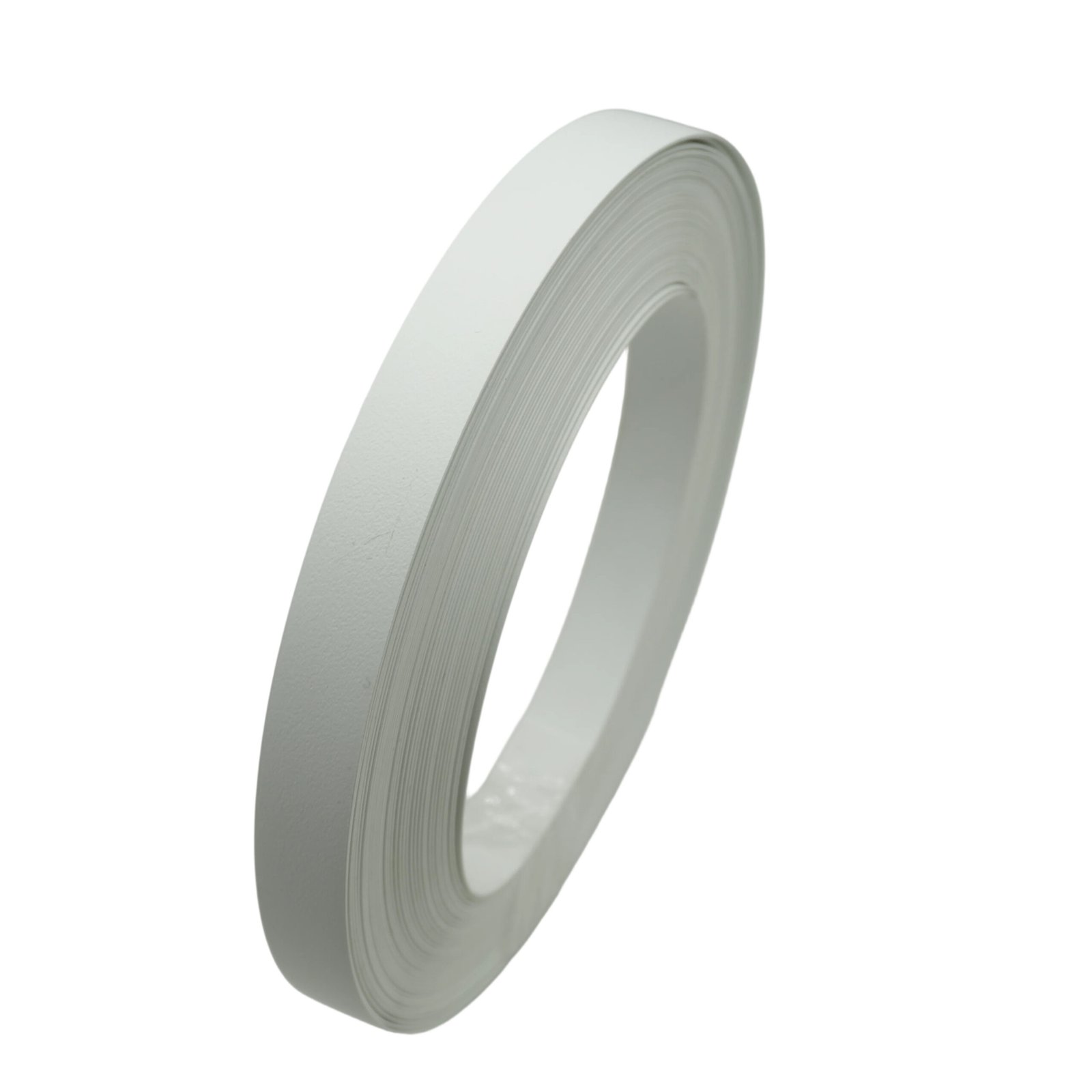
White PVC Edge Banding
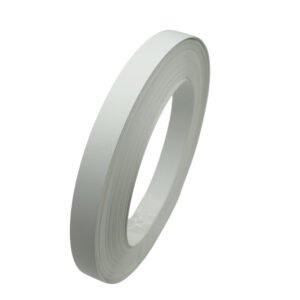
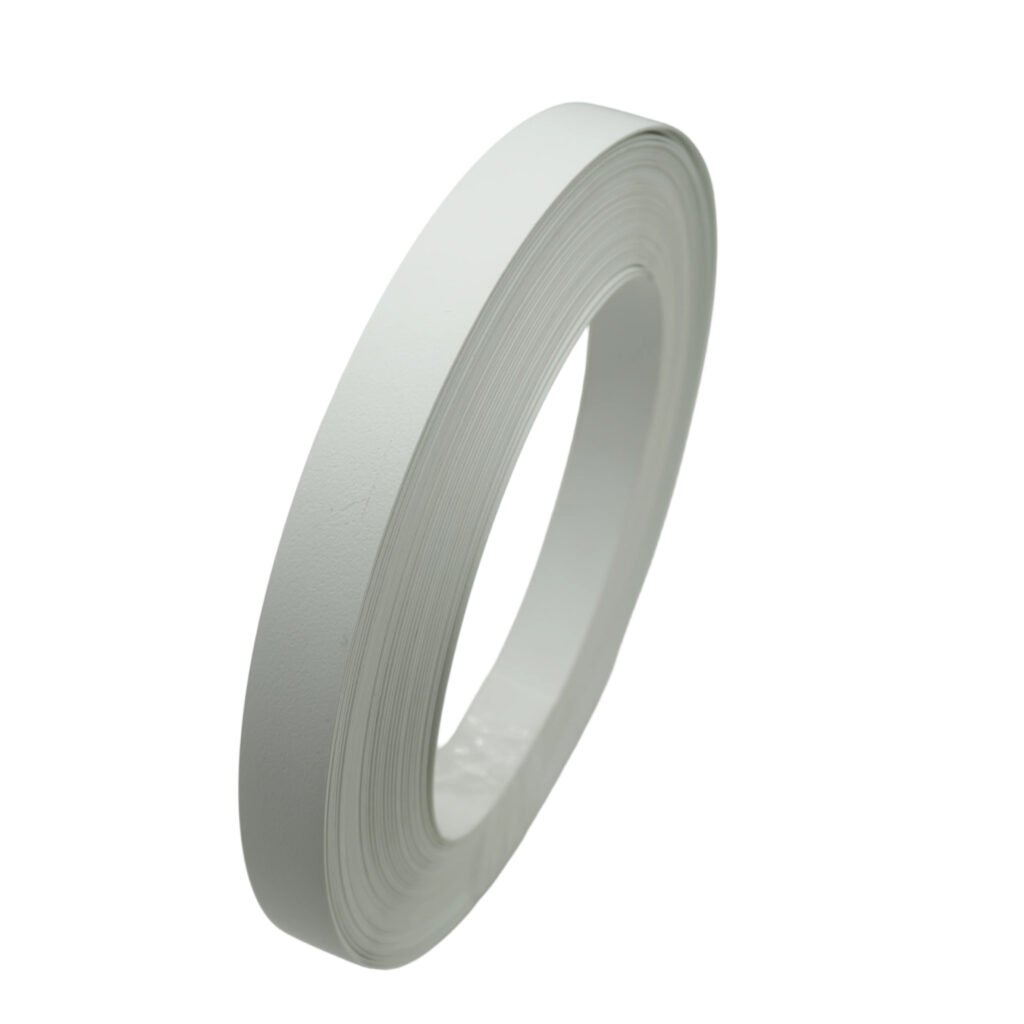
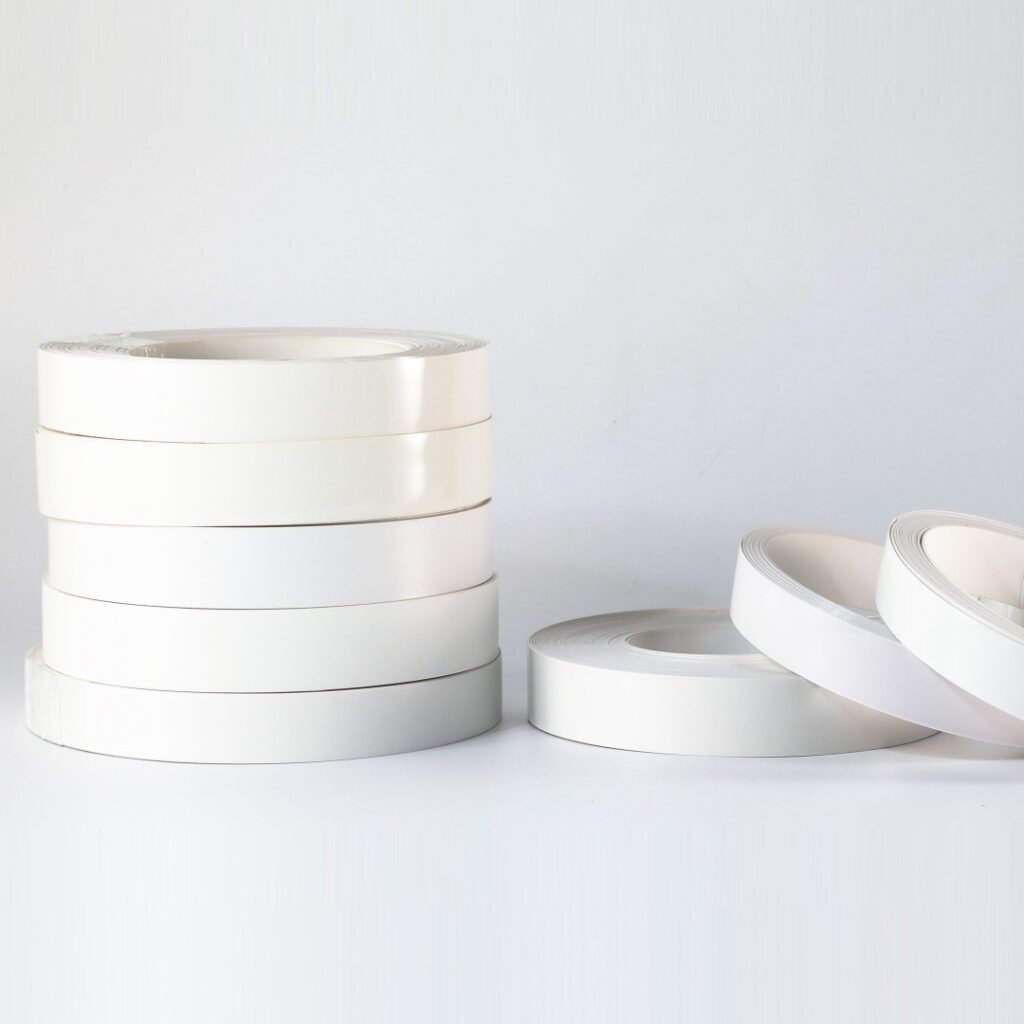
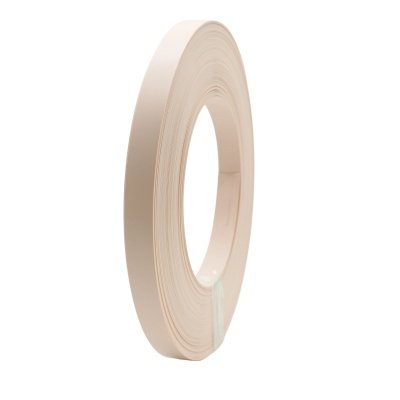
White PVC edge banding is a useful edge finishing material for furniture panels, cabinets, wardrobes, shelves, desks, storage and other board based products. This product is made of PVC and is meant for covering exposed edges of panels and for a clean finished look.
If a furniture panel has an exposed cut edge, the edge must be finished with an appropriate finishing material that is compatible with panel construction and production processes. Manufacturers using white or light colored boards will find white PVC edge banding a dedicated PVC solution. The white color is an excellent match for the panel face and the PVC material provides a flexible format for standard edge-banding use.
PVC Material — Built for Edges People Touch
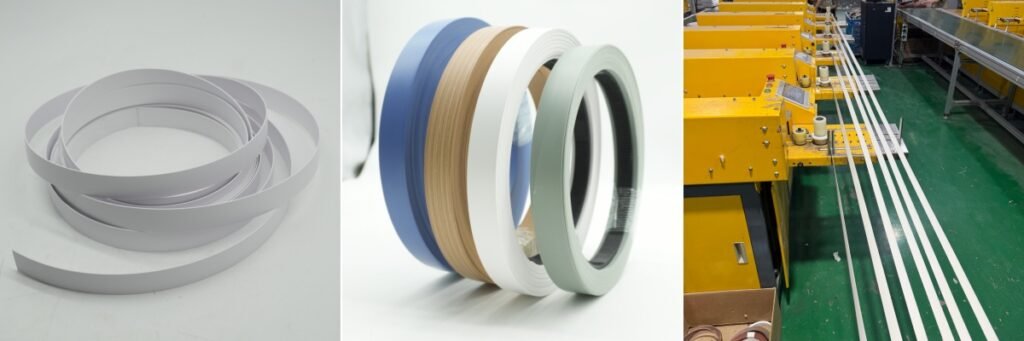
It does not tear
PVC is made from plastic and melamine is made from paper. Paper strip cabinet edge banding is easily chipped, bumped at corners, and handled everyday.Paper strip cabinet edge banding is easily chipped, corner bumped, and handled every day. Consider the location of the edge – a corner of the desk struck by the legs of the chair, a door on the cabinet knocked by the mop, an edge of a worktop struck by a cutting board. Edge banding that is paper based doesn’t hold up in those areas for a year. PVC survives them. It’s the material difference which determines where PVC goes: cabinet doors, desk edges, tabletops — every visible edge that people touch.
It does not absorb water
PVC is non-porous. White PVC edge banding will not swell in the middle like paper-based edge banding in kitchens, bathrooms, and wet areas. The secret enemy under the band is moisture which works its way through the edge of the MDF or particleboard, causing the core to swell and the band to peel. PVC is impervious to water at the surface. When combined with PUR adhesive, it can withstand moisture for a long time and move the edge.
It wipes clean
The PVC surface does not stain. Food, fingerprints, cleaning products — wiped off in one pass. On white edges, that matters: dirt shows, and a surface that cleans easily keeps the white looking white. This is why white PVC edge banding is specified for kitchens, hospitals, schools, and retail spaces — anywhere hygiene and cleanability are part of the buying decision.
It flexes instead of cracking
PVC bends with the panel; paper-based edge banding cracks. That flexibility is what keeps the edge bonded through temperature changes in the furniture’s life — winter heating, summer humidity, the natural movement of wood panels under the band. A brittle edge band delaminates under movement; PVC flexes with it.
Thickness Range — One Material, Every Edge
White PVC edge banding covers a range melamine cannot: 0.4 mm through to 3.0 mm. Choose by what the edge does, not by what is cheapest.
| Thickness | Edge Type |
| 0.4–0.6 mm | Internal edges — drawer boxes, shelf edges, carcass interiors. Nearly invisible, low cost. |
| 1.0–1.5 mm | Visible cabinet edges — doors, drawer fronts, desk sides. Standard for most furniture. |
| 2.0 mm | Heavy-use edges — worktops, commercial furniture, public spaces. |
| 2.5–3.0 mm | Thick-profile edges, rounded bullnose, premium worktops. |
Thickness changes more than durability. Thin PVC trims flush with standard tooling and reads as a clean flat line. Thicker PVC needs pre-milling and radius cutters to shape properly, but it gives the edge a substantial, rounded profile that reads as premium. Choosing the wrong thickness is one of the most common reasons furniture looks cheap — too thin on a worktop, too thick on a shelf edge. Tell us your edge type and we will confirm the thickness and tooling.
Bends, Wraps, and Postforms
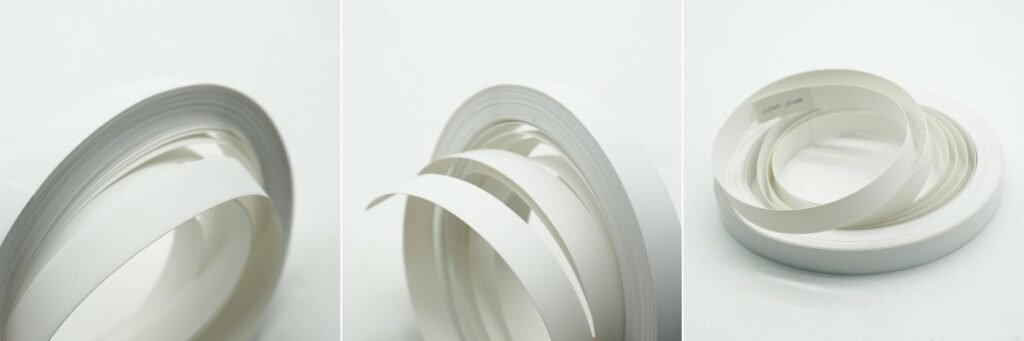
Curved edges
White PVC edge banding follows rounded profiles and bent panel edges without cracking — desk corners, radius cabinet ends, curved furniture lines. Paper-based edge banding splits at the bend. For gentle radii, standard PVC at 1.0–1.5 mm is enough; for tighter curves, flexible-grade PVC is the right call.
Postformed worktops
Postforming-grade PVC is heated and wrapped around worktop profiles at 150–180°C, producing a continuous edge with no visible joint. The panel edge is routed to the exact radius, the PVC softens under the heat, and the wrap station presses it onto the profile in one pass. The seamless worktop look starts here — and it cannot be done with melamine.
Flat edges
Standard flat application on straight-cut panels — the default run for most furniture lines. This is where white PVC edge banding spends most of its time: doors, carcass edges, drawer fronts on automatic lines at 15–30 m/min.
Whatever the edge shape — flat, rounded, or postformed — white PVC edge banding is the material that follows it.
White That Stays White
The volume colour, stocked and ready
White is the best-selling furniture colour in residential and contract markets. White edge banding is stocked in the tones furniture actually uses, so a white line never waits on edge banding.
No yellowing
White PVC edge banding uses UV-stabilized pigments that resist yellowing under showroom lighting and near-window placement. The mechanism matters: cheap white PVC yellows because the pigment degrades under UV exposure, turning from white to cream to yellow. Our white is formulated to hold its tone for the furniture’s service life. A white edge that yellows in six months makes the whole piece look old — that is a return, not a cosmetic issue.
Three white tones
Pure white (neutral), warm white (ivory undertone), cool white (subtle blue undertone) — matched to the most common white melamine, laminate, and PVC boards from major manufacturers. The undertone is where white matches fail: a pure white edge on a warm-white board reads wrong in daylight even when it looks fine in the factory. Send a board sample and we match undertone under D65, A, and TL84 light sources.
Batch-locked white
Every batch is measured against a retained white master with a spectrophotometer, and the result is documented on the Certificate of Analysis. Reorders match the batch before them — the white you approved is the white you get in every shipment.
Glue Pot Ready — EVA or PUR
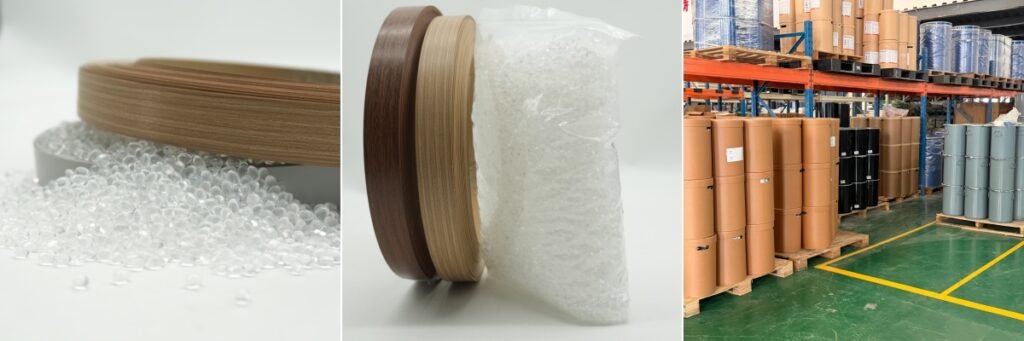
White PVC edge banding runs with standard edge banding adhesives. Choose the glue by environment — the PVC itself is consistent across both.
EVA hot melt for dry interiors — cabinets, wardrobes, office furniture. Standard application at 170–190°C, glue film 0.10–0.15 mm for thin PVC, 0.15–0.20 mm for 2 mm. EVA is the economical choice for indoor, moderate-temperature use, and it runs fast on high-volume lines.
PUR reactive adhesive for kitchens, bathrooms, and wet areas. PUR cures permanently and seals the core against moisture that EVA cannot. The cost difference per meter is small; the difference in field failures is not. For any edge that sees water, PUR is the specification.
We supply the white PVC edge banding and the adhesive together — material and glue matched from one source, no compatibility guesswork.
Where White PVC Edge Banding Goes to Work?
- White kitchen cabinets and worktops— door edges, drawer fronts, carcass edges; PUR-bonded in wet zones around sinks and hobs
- White wardrobes and closets— visible edges that take daily handling and sliding door traffic
- Office desks and workstations— impact-resistant edges at forearm height, in open-plan and contract offices
- Bathroom vanities— moisture-proof white in permanent humidity, paired with PUR
- Education and contract furniture— white desks, storage, public-sector projects where cleanability and durability are specified
- Retail display— white fixtures where a clean, consistent white face is part of the brand
For internal, low-impact edges, a thinner PVC or melamine strip may be enough. For visible, impact-prone, or wet edges, white PVC edge banding is the specification.
Ordering White PVC Edge Banding
Samples: Free sample rolls available, customer to pay shipping charges. Customers can also supply samples of their white furniture panels for accurate white colour matching.
MOQ: 3km per colour per width. There are several widths that can be used in the same order to meet various production needs.
OEM & Custom Service: OEM furniture manufacturing, distributors, importers and private label customers are available. Options such as width, thickness, surface finish, roll length, packaging, labelling and other product specifications can be customised as per your requirement.
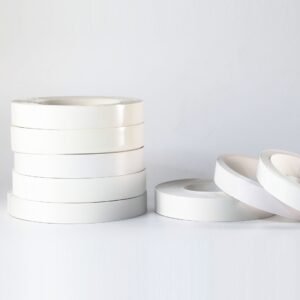
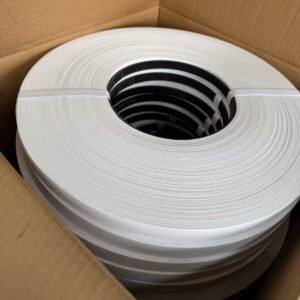
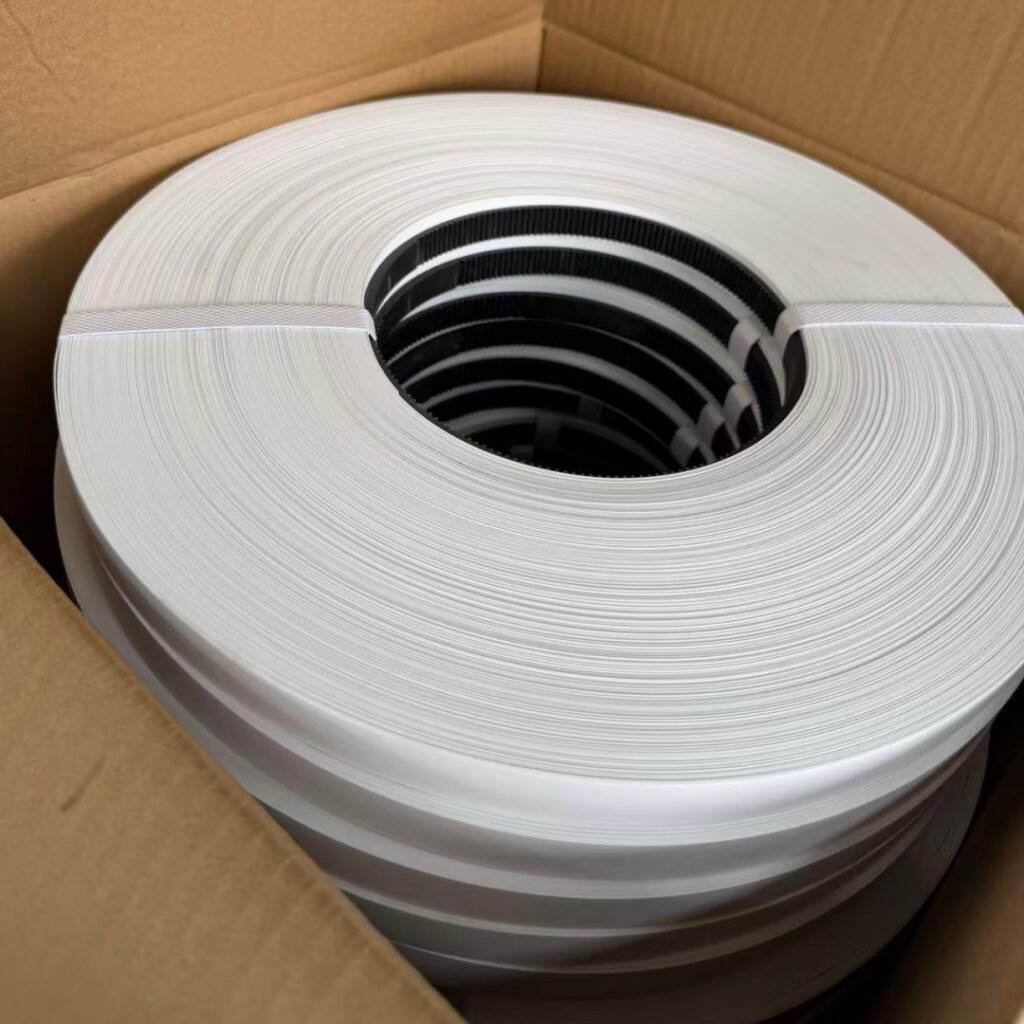
Packaging: The white PVC edge banding can be provided in rolls, and the inner and outer packaging can be customized. Packaging can be modified for retail, wholesale, OEM and various shipping needs.
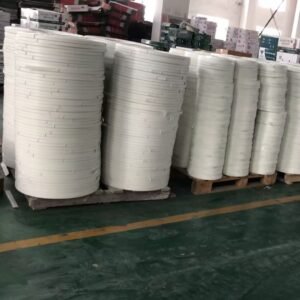
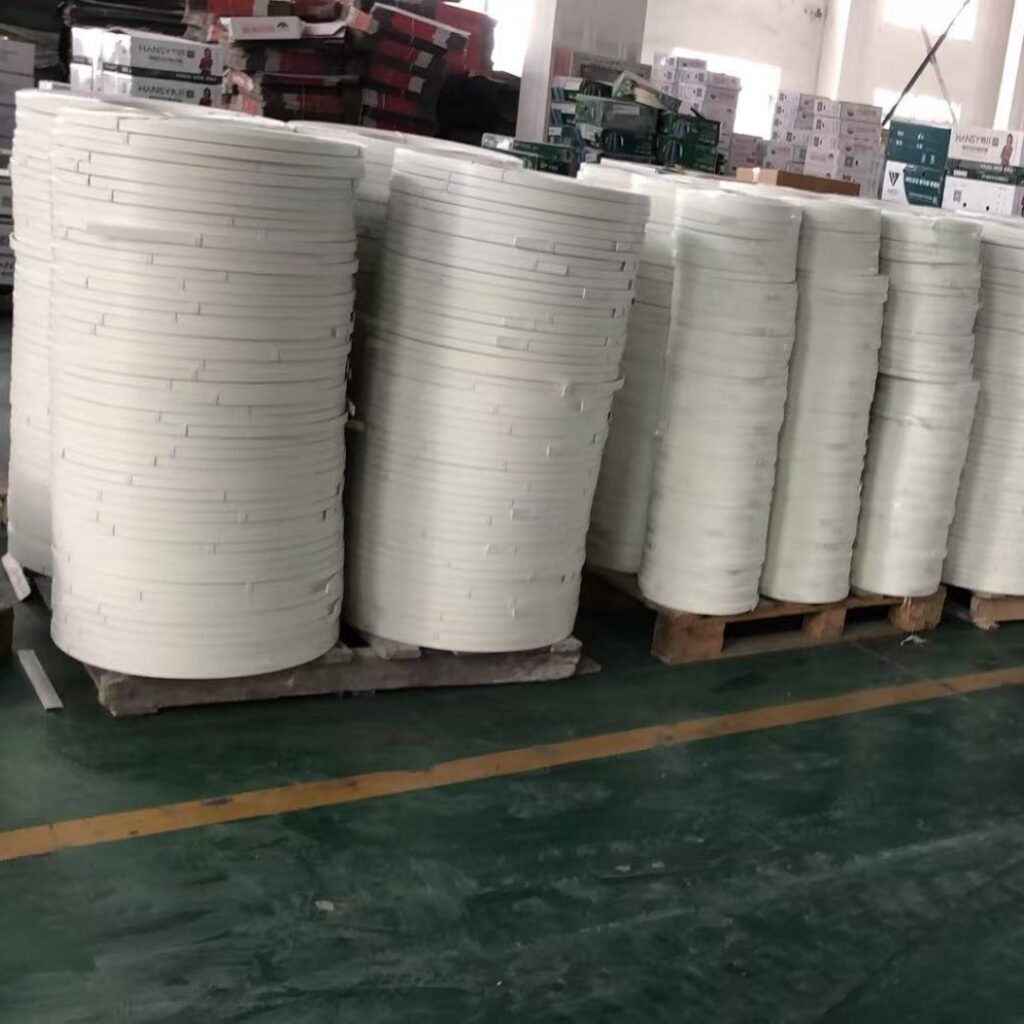
Pallet Packing: Rolls can be safely loaded onto pallets for bulk orders in order to get better protection when handling, loading and shipping internationally. Depending on the volume of orders and shipping needs, the number of pallets and packing configuration can be customized.
Lead Time:Available in stock, white colours and standard widths (3-5 working days). When you order custom production, it will take about 7-15 working days. The initial batch – white colour matching – 15-20 working days.
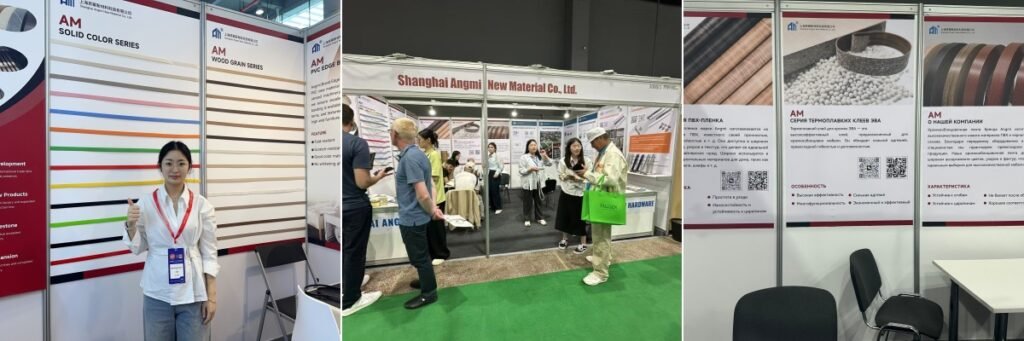
Shanghai Angmi New Material Co., Ltd. produces edge banding materials and EVA and PUR adhesives for furniture and panel edge finishing applications and provides customers with materials that are related to its products.
Frequently Asked Questions
Matte or gloss — which surface should I choose?
Matte is suitable for modern, everyday furniture and hides fingerprints better. Gloss provides a more reflective appearance. The choice depends on the furniture design and use.
Does it work on MDF, particleboard, and plywood?
Yes. White PVC edge banding is suitable for MDF, particleboard, plywood, and other standard furniture panels.
How should white PVC edge banding be stored?
Keep rolls in their original packaging at 10–30°C, away from direct sunlight, heat, and moisture. Store them off the floor.
Can you provide textured or wood-grain surfaces?
Yes. In addition to solid white, textured and wood-grain PVC edge banding can be available for specific furniture designs.
Can you provide white colour samples?
Yes. Standard white swatches are available, and customers can also send a board sample for colour matching.
Do you produce other PVC edge banding colours?
Yes. We produce black, grey, wood-grain, and custom-colour PVC edge banding.
How is the product packed for shipping?
Rolls can be packed in boxes, labelled by specification and batch, and palletized for container or other bulk shipments.
Request a Quote for White PVC Edge Banding
Ready to order white PVC edge banding? Send us your required width, thickness, quantity, surface finish, and packaging requirements.
For OEM or bulk orders, we can confirm specifications, provide samples, and arrange a quotation based on your requirements.
How to order:
- Send your specifications or panel sample.
- Confirm colour, size, packaging, and quantity.
- Approve the sample and quotation.
- We arrange production and shipment.
Contact us today to check availability, request a sample, or get a quotation
WhatsApp: +86-13681945604
Email: emily.gu@angmigroup.com


Reviews
There are no reviews yet.