




Black Melamine Edge Banding
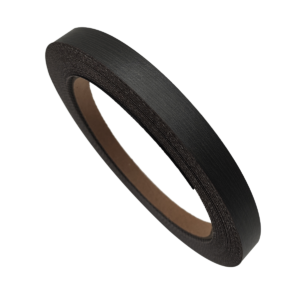
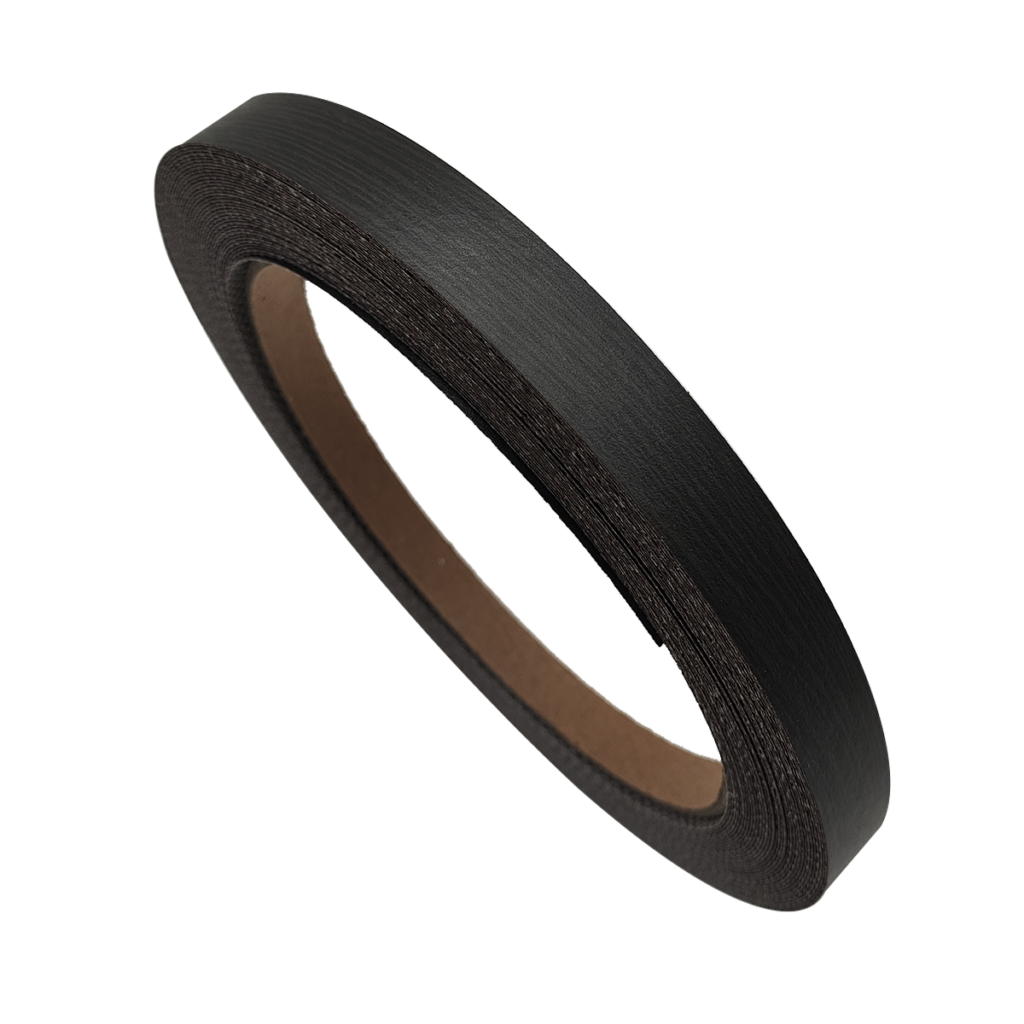
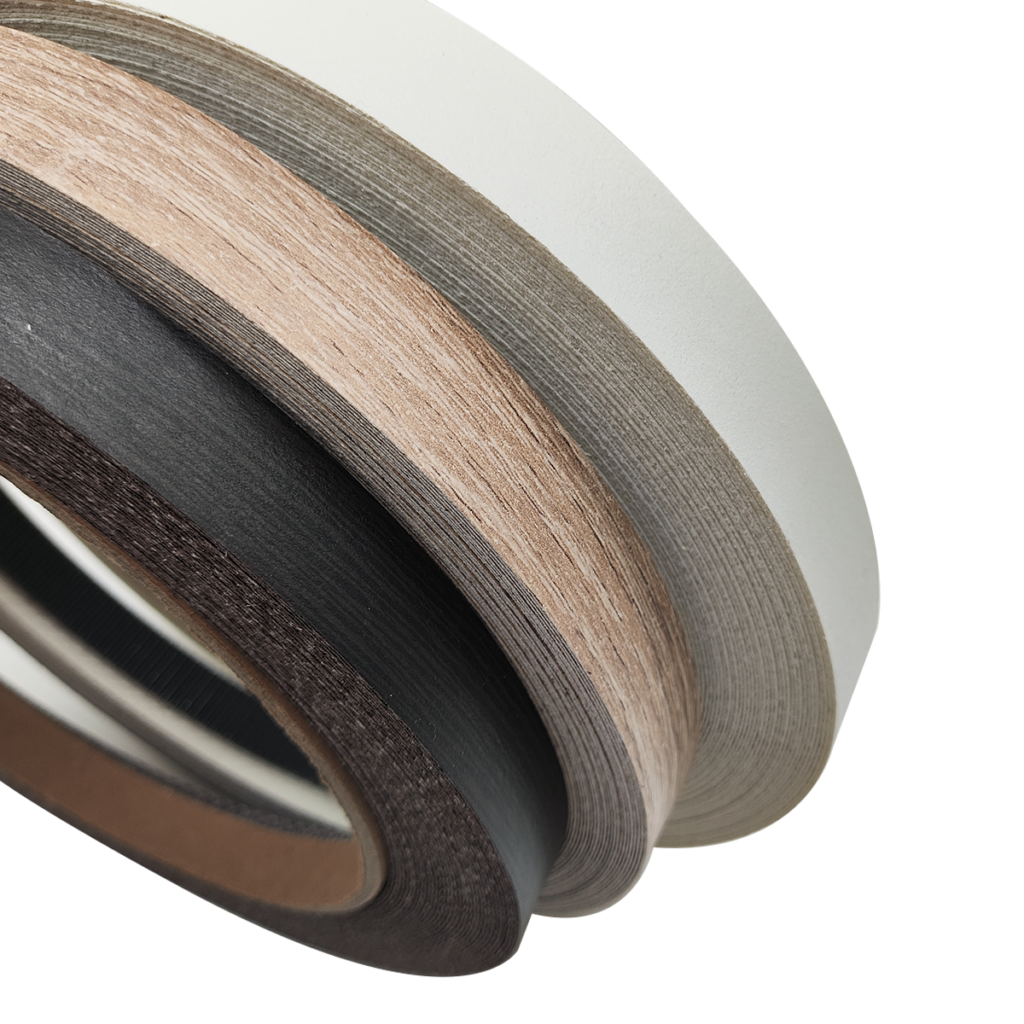
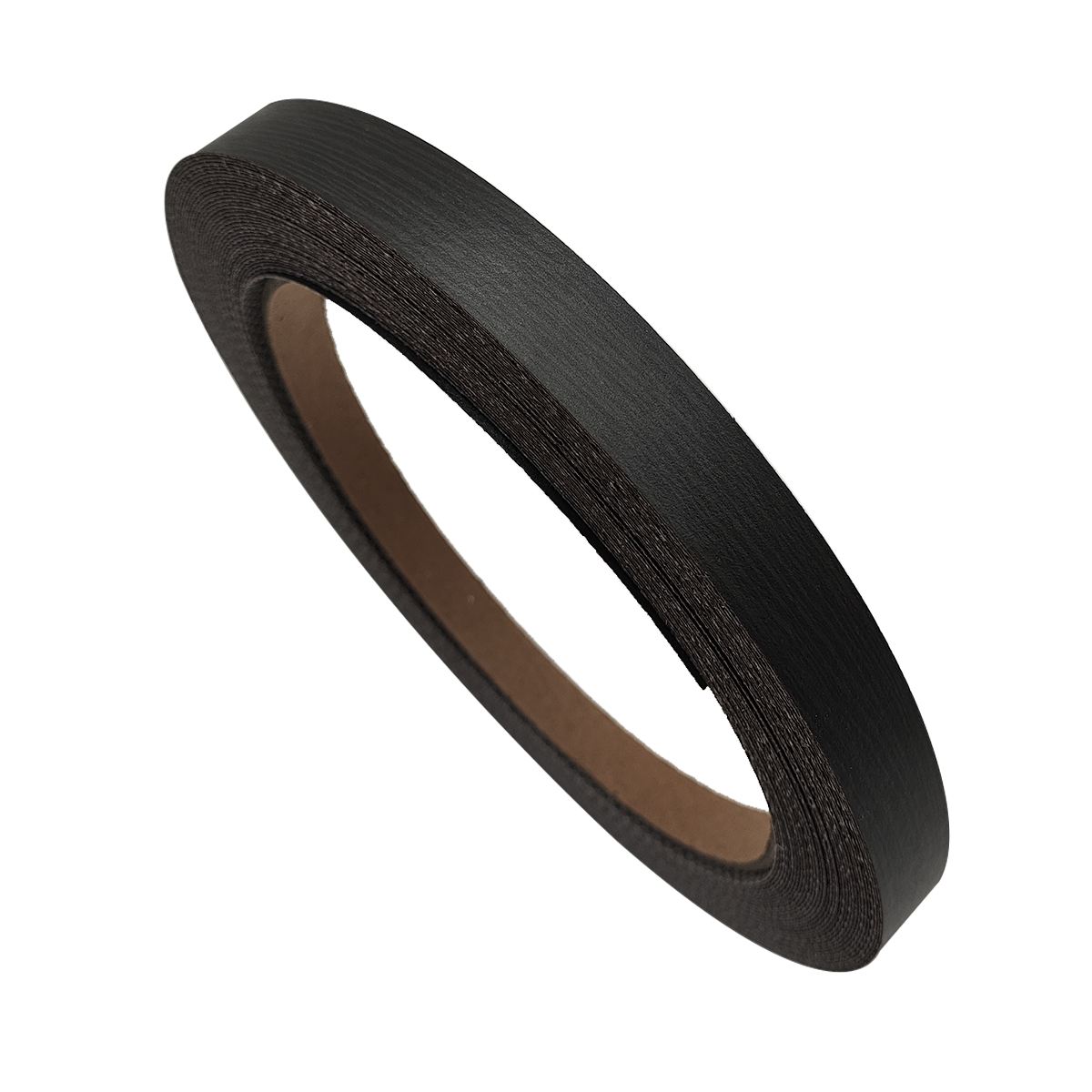
Black melamine edge banding is a melamine-based edging material for furniture panels that require a defined black finished edge. It combines the visual character of black with the specified properties of melamine, making it a focused choice for furniture and cabinet panels made from MDF, particle board and melamine-faced boards.
Designed for manufacturers looking for both a specific edge color and material, it provides a finished edging solution for panels where the edge remains visible and needs to coordinate with the overall furniture design.
Black Melamine Edge Banding at a Glance
| Black Melamine Finish | Furniture Panel Edging |
| Combines a defined black decorative appearance with melamine edge banding for a coordinated finished edge. | Designed for finishing exposed edges of MDF, particle board and melamine-faced furniture panels. |
| Decorative & Functional | Multiple Widths & Thicknesses |
| Provides edge coverage while contributing to the overall appearance of the finished furniture panel. | Available in different width and thickness options to match panel dimensions and production requirements. |
What Defines Black Melamine Edge Banding?
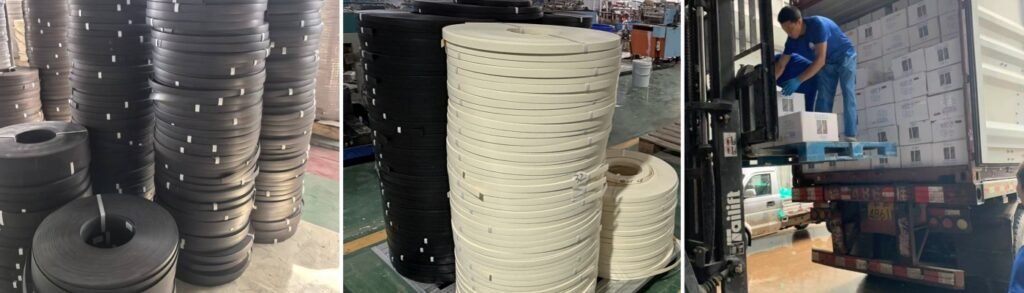
Black melamine edge banding is characterized by the black melamine surface, construction of the material and edge appearance after processing. These properties are the key to the value of the product in combination with each other in one product that is suitable for furniture panels.
Black Melamine Surface
A clean dark decorative edge on the panel is achieved with the black melamine surface. It can be coordinated with dark panels or form a clear black outline with different color surfaces, thus becoming part of the furniture appearance.
Melamine-Based Edge Construction
The edging is made with a melamine-based construction, so the product is selected not only for its black color but also for its specified edge material. This is important for furniture projects where the edging needs to correspond with melamine-faced decorative panels and the overall panel finishing system.
Color + Material Consistency
For a product specified as black melamine edge banding, color and material are equally important. A black edge made from another material is not the same product, while a melamine edge in another color does not meet the same visual requirement. The combination ensures that the finished edge meets both the appearance and material specification of the project.
Finished Edge Appearance
After application and trimming, the black melamine edge forms a finished surface along the exposed panel edge. The final result depends on the selected width, thickness, panel and processing method, but the intended outcome is a neat, coordinated edge that supports the appearance of the completed furniture component.
How the Black Melamine Edge Looks on Different Panels?
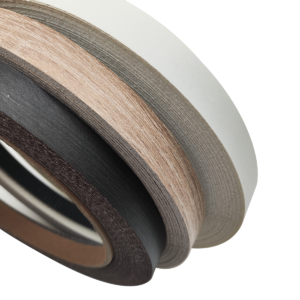
The appearance of Black Melamine Edge Banding changes with the color and decorative finish of the panel it is applied to. The same black edge can create a seamless look on dark furniture, a stronger outline on light surfaces, or a subtle transition on woodgrain panels.
Black Panel
When applied to a black panel, the black melamine edge maintains the same dark visual direction across the face and edge of the furniture component. This creates a more continuous appearance and minimizes the visual break between the panel surface and its finished edge.
Light Panel
On white, beige, cream or light grey panels, the black edge creates a clear perimeter around the board. The strong contrast makes the panel shape more defined and allows the edge to function as an intentional part of the furniture design.
Woodgrain Panel
The black edge will provide a clear demarcation between the patterned panel face and the exposed edge when used with woodgrain surfaces like walnut, oak or decorative finishes. It can be used to create a subtle dark accent or a more prominent outline, depending on the depth of the woodgrain color.
Dark Grey or Charcoal Panel
With dark grey, graphite or charcoal surfaces, the black edge creates a close-toned combination without introducing a contrasting decorative color. The result is a restrained, coordinated edge that works well with darker furniture palettes.
Panel Compatibility
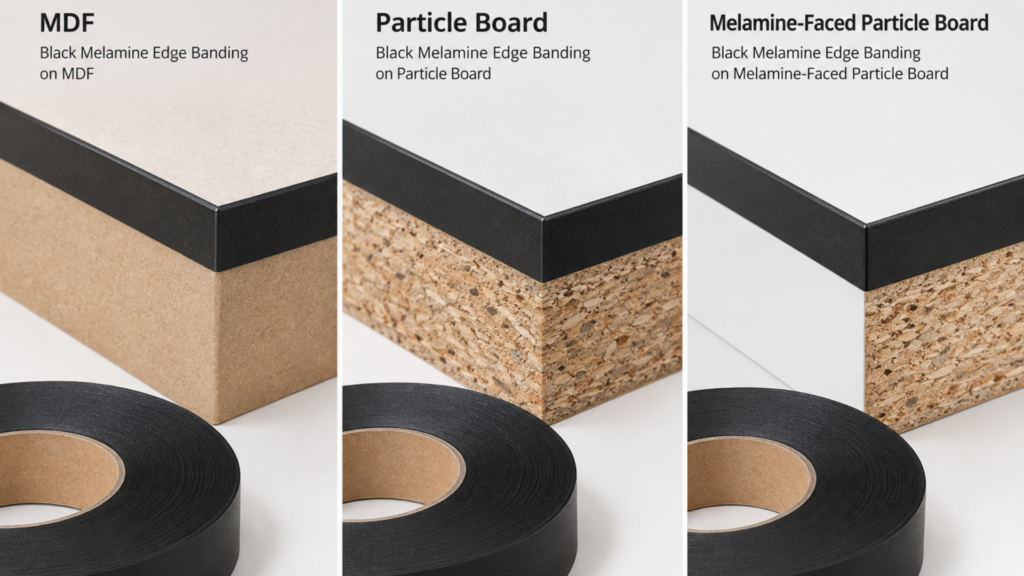
Black Melamine Edge Banding can be used with a range of commonly used furniture panel materials. Selection should be based on the panel construction, surface finish and edge-banding process to ensure the edging provides the required coverage and finished result.
MDF
Suitable for MDF furniture panels used in cabinets, wardrobes, shelving and other panel-based furniture. The required edge banding size should be selected according to the actual panel thickness and processing requirements.
Particle Board
Compatible with suitable particle board components used in furniture manufacturing. It can be specified for cabinet panels, shelves, storage units and other exposed board edges.
Melamine-Faced MDF
A suitable option for MDF panels finished with a melamine decorative surface. The edge banding can be selected as part of the overall panel finishing specification.
Melamine-Faced Particle Board
Suitable for furniture panels made from melamine-faced particle board, particularly where exposed edges require a coordinated finished treatment.
For all panel types, the final selection should be confirmed according to panel thickness, required edge coverage, edging equipment and production conditions.
Edge Banding Result
The final product of black melamine edge banding will be dependent on the specification of the edging and the edge-banding process that it is applied to. If the right width and thickness are used, the material can offer 100 percent edge coverage, a clean finished edge and uniformity of appearance after applying and trimming.
Complete Edge Coverage
The edge banding should be continuous and not leave any excess gaps or unsealed edges. Selecting the correct width is especially critical for adequate coverage of various thicknesses of panels.
Clean Finished Edge
The edge should closely follow the panel profile after application and trimming and form a nice transition between the decorative surface and the finished edge. A clean overall appearance of visible furniture components is maintained through correct processing.
Controlled Trimming
The surplus edge material should be cut based on the panel and processing technique. Appropriate edge dimensions minimize waste of material and promote a uniform finished edge.
Panel Thickness Matching
The width and thickness should be determined by the thickness of the panel and the desired edge thickness. This matching with the specification ensures the desired coverage and edge profile in production.
Specifications
| Parameter | Specification |
| Product | Black melamine edge banding, pre-glued |
| Material | Melamine-impregnated decorative paper |
| Total thickness (with adhesive) | 0.5 – 0.6 mm |
| Width range | 12 mm – 630 mm |
| Standard widths | 18, 22, 28, 32, 40, 45, 55, 65 mm |
| Black tones | Jet black, charcoal black, custom match |
| Surface finish | Matte, semi-matte, high-gloss |
| Colour match | ΔE ≤ 1.0 |
| Adhesive activation | 120 – 150°C |
Application Areas
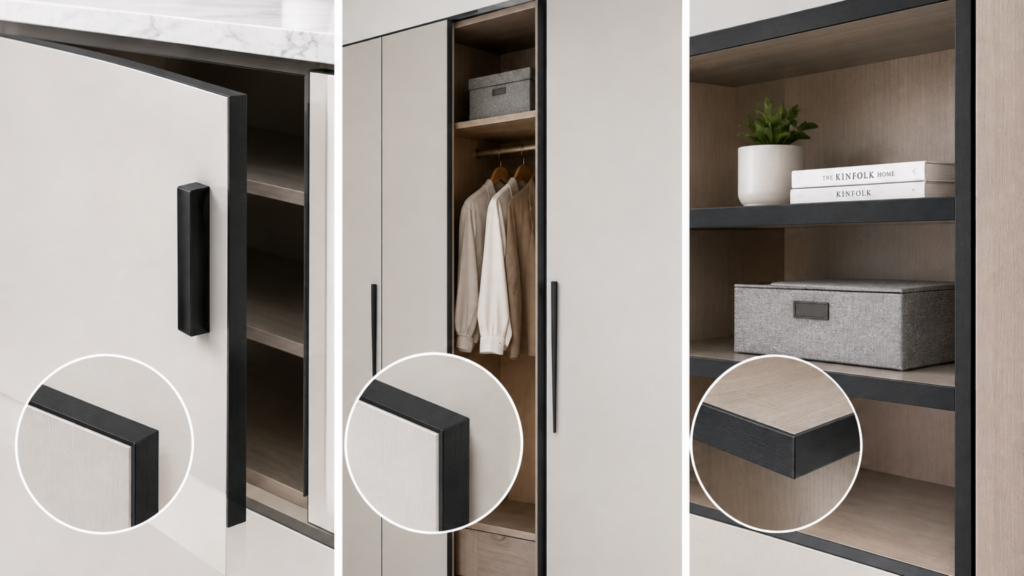
Black Melamine Edge Banding is used on furniture components where the panel edge is exposed after cutting and remains visible in the finished product. The specific application depends on the panel construction, edge dimensions and required finished appearance.
Cabinet Doors
Used along the exposed edges of cabinet doors to provide a finished border around the panel and complete the door profile.
Wardrobe Panels
Suitable for wardrobe doors, side panels and other visible panel components where the exposed edge requires finishing.
Shelves
Applied to the front and other visible edges of fixed or adjustable shelves, particularly where the finished edge can be seen during normal use.
Side Panels
Used on exposed cabinet, storage and furniture side panels to cover the cut edge and create a finished surface.
Desks
Suitable for desktop edges, work surfaces and other visible panel sections where the edge remains exposed after machining.
Discuss Your Furniture Application →
Ordering Information
Samples:1–2 meter sample rolls are free of charge, with shipping covered by the customer. Samples are dispatched within 3 working days, with a black board sample available for color and surface matching.
MOQ:10,000 meters per color per width. Multiple widths can be combined in one order.
Lead Time:
Stock tones & standard widths: 3–5 working days
Custom production: 7–15 working days
Custom black color match, first batch: 15–20 working days
Quality Documentation:A COA is provided with every batch, covering thickness, width, color (ΔE vs. approved black master) and surface inspection. Retained samples are stored for 12 months.
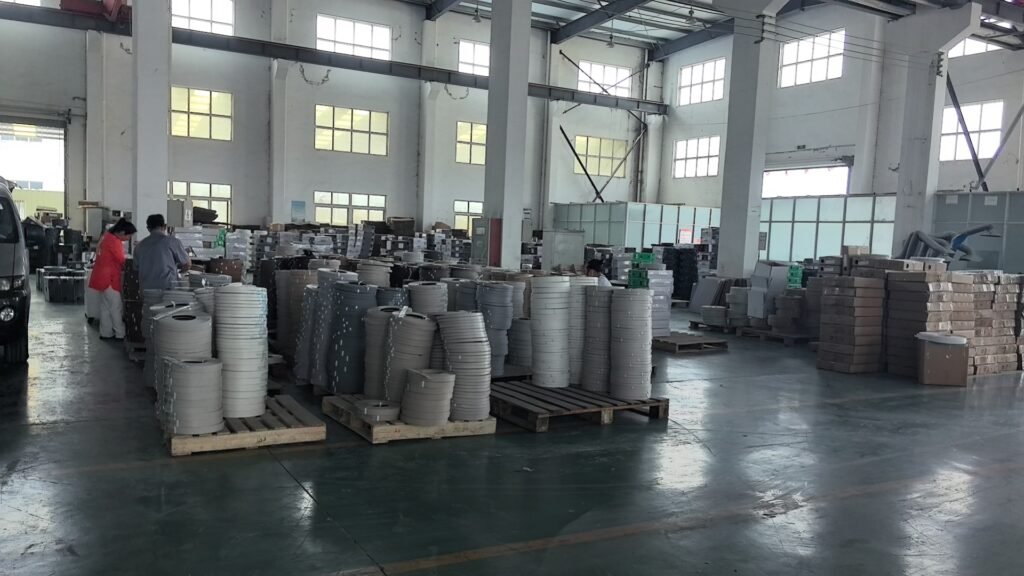
Single-Source Supply:Shanghai Angmi New Material Co., Ltd. supplies black and white melamine edge banding, PVC edge banding and compatible bonding adhesives from one source.
Frequently Asked Questions
How should black melamine edge banding be stored?
Store rolls at 10-30°C and relative humidity less than 60%, in their original packaging, out of direct sunlight and heat. Store in a sealed container until ready to use. The recommended shelf life is 12 months under the recommended conditions.
Why does a trimmed black edge look grey after processing?
Inspect the temperature of the heating, pressure of the roller and condition of the cutter. The temperature of 120-150℃ is suitable for the adhesive wet-out; the pressure of the pressure roller is 0.2-0.3Mpa, and the sharpness of the cutter is checked. When color coverage is not adequate, the problem may not be correctable by machine adjustments and sample testing is recommended.
Can you match black melamine edge banding to EGGER or Kronospan board colors?
Yes. Color references can be used as a starting point for matching but should be confirmed with a board sample as there may be variations between batches. Before production, color difference can be controlled to ΔE ≤ 1.0.
Can we order samples before meeting the MOQ?
Yes. Sample rolls come as 1–2 meters long for free with the customer paying for shipping and usually arrive in about 3 working days. Trial quantities of the product can be discussed for quantities smaller than the standard MOQ.
How does the MOQ work for different widths or black tones?
MOQ: 10,000 meters per colour per width. Several widths may be ordered together and different tones of black are counted separately.
How is black edge banding protected during shipping?
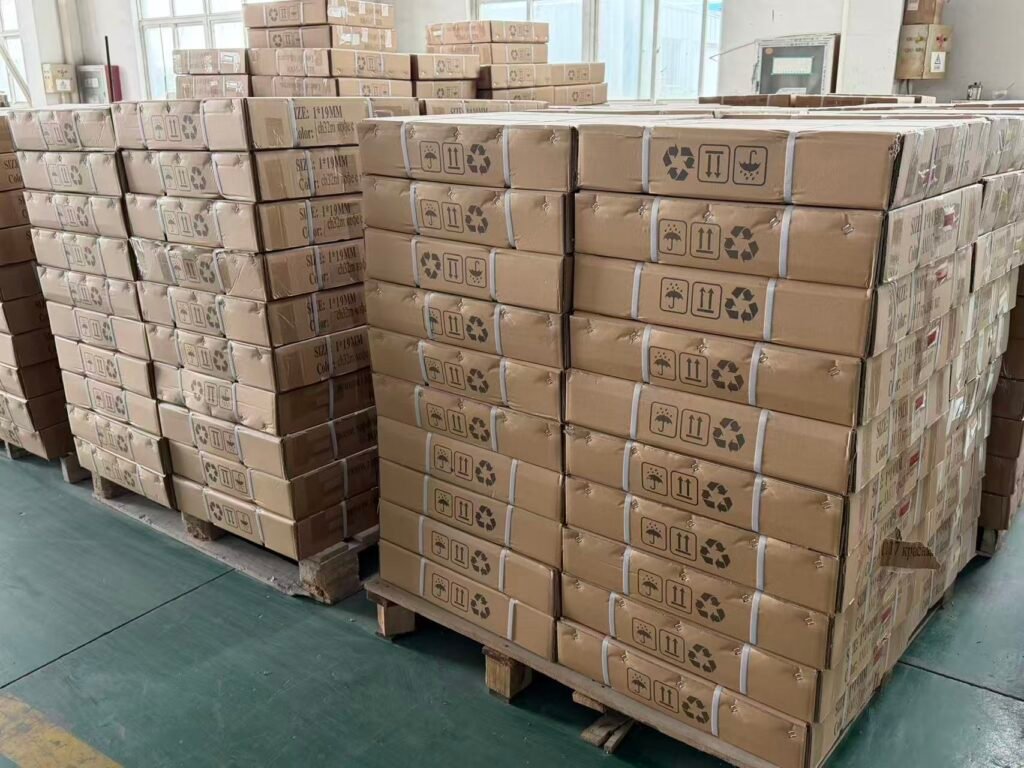
Each roll is individually wrapped and boxed, with color, thickness, width, roll length and batch number clearly marked. Rolls are palletized with protective separation to reduce surface contact during transport.
What is the lead time for an urgent restock?
Stock black tones and standard widths: 3–5 working days. For urgent orders, stock availability and the earliest dispatch date can be confirmed at enquiry.
What technical support is available with the order?
Support includes machine setup guidance, production troubleshooting and color verification, with a typical response within one working day.
Need the Right Black Melamine Edge Banding for Your Project?

Tell us your panel material, edge size, quantity and black color requirement. We can help confirm the suitable specification, arrange samples and verify the color match before production.
WhatsApp: +86-13681945604
Email: emily.gu@angmigroup.com


Reviews
There are no reviews yet.