



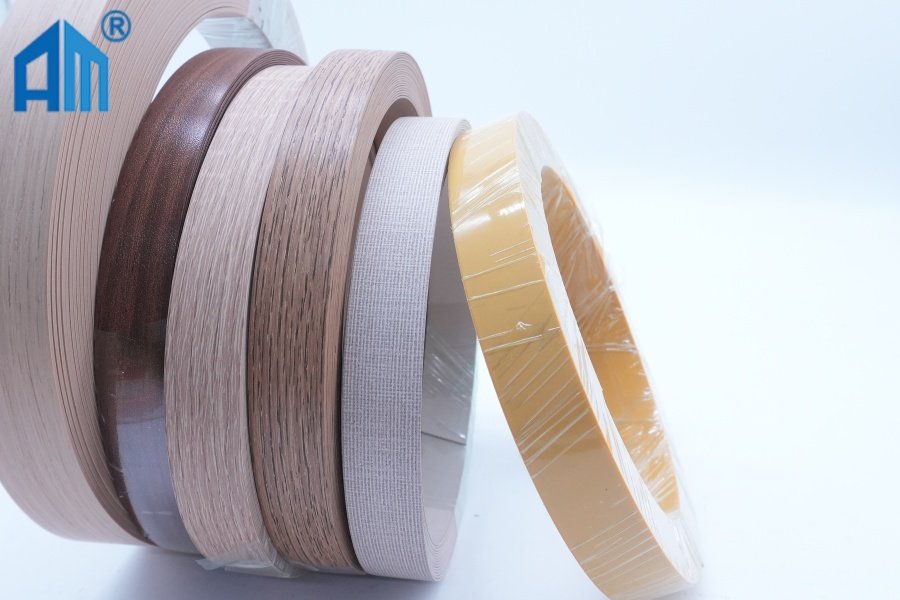
PVC vs ABS Edge Banding: Which Is Better for Furniture?
The two common materials for furniture edge banding are PVC and ABS.The two general materials used for furniture edge banding are PVC and ABS. They both seal around exposed edges on the panel, enhance the look of the panel and provide furniture edge protection against wear and tear. They do vary with material composition, price and performance, however, which may determine which furniture applications they are suitable for.
The issue of cost is not the only factor to consider for furniture companies. The correct material should possess the required properties of appearance, durability, processing performance and cost.
So, when comparing PVC vs ABS edge banding, which material is better? When common furniture manufacturing is the goal, PVC can be a cost-effective option, and ABS can be considered when the need for a chlorine-free material or specific performance is crucial.
Knowing these differences can help manufacturers decide on the edge banding they need for their product and not waste money on unnecessary features.
What Is the Difference Between PVC and ABS Edge Banding?
Furniture edge banding is typically made from PVC or ABS. They both cover exposed edges of panels and give a completed look, but they have different chemical make-up and properties.
What are the implications of such differences? Hardness and impact strength can be used to describe the materials’ response to some physical stresses, while the softening temperature gives information about the behaviour of the material under heat. None of these measurements alone indicates the overall edge banding durability, however.
The advantages and disadvantages of the edge band should also be taken into account, such as thickness, formulation, surface finish, adhesive compatibility and processing conditions for furniture manufacturers. PVC is frequently used for regular furniture applications, whereas ABS might be used if either the need for chlorine free material or specific heat performance is significant.
Why Is PVC Edge Banding So Widely Used?
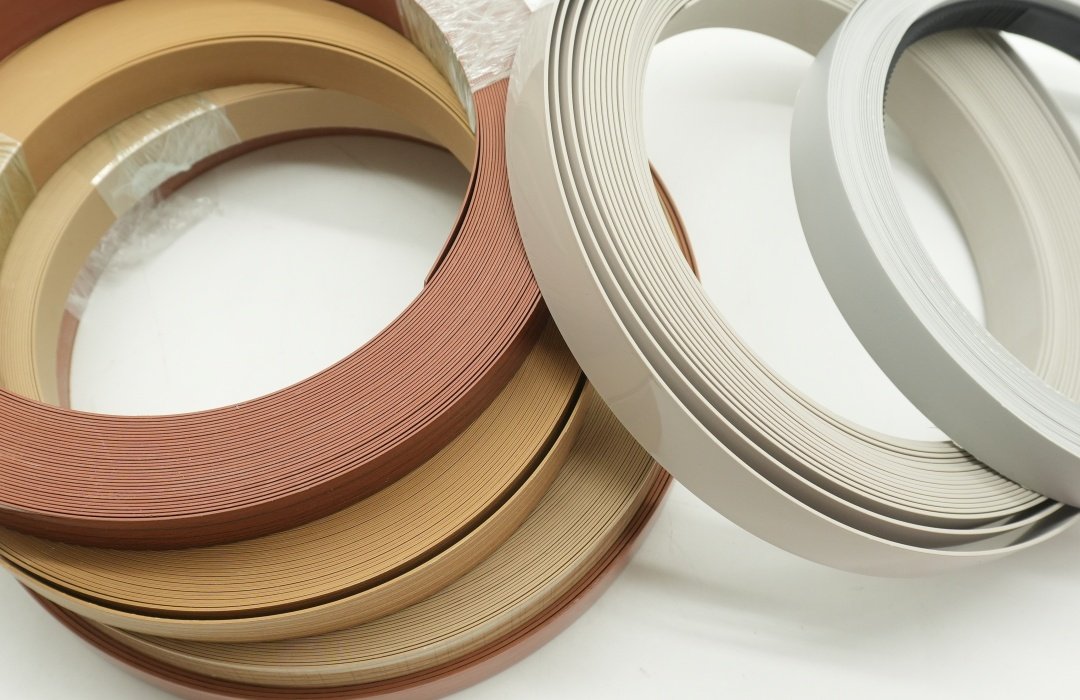
In the furniture industry, PVC is a popular choice for edge banding due to its combination of affordability, processing efficiency, and versatility. It has been used successfully in the furniture industry and is therefore applicable to a wide variety of common applications from wardrobes and desks, to shelving and kitchen furniture.
It is an advantage in many edge banding applications, such as hot-melt bonding, trimming, milling and scraping. Use of edge banding can provide clean edges and consistent finish if the edge banding is compatible with the type of adhesive and machine settings. In addition, it is flexible enough to be used in a variety of straight and curved furniture parts depending on usage specification.
PVC provides a good degree of design flexibility. Thickness, width, color, wood grain and surface finish vary in order for manufacturers to match edge banding to decorative panels. It also plays a role in the final appearance and edge protection, so it should be taken into account when choosing the material for various furniture parts and assemblies.
Cost is another factor why it is popular. PVC can be used to offer the desired look for many traditional furniture products without any unnecessary material costs. But it still requires formulation, thickness, compatibility of adhesive and operating conditions. For applications where higher temperatures or specific durability demands are required a more exact specification might be required.
In summary, PVC is still a material that offers a variety of options for the furniture industry, balancing ease of manufacture, visual appeal, and price.
What Makes ABS Edge Banding Different?
One of the most unique edge banding features is the type of material used, which is chlorine free and has a combination of mechanical and thermal properties. ABS does not have any chlorine in the polymer structure, a consideration when choosing material for furniture projects that require special materials.
The other important feature is its performance with edge processing. Altered edge banding can be coloured through the product and rounded edges and corners will retain the same colour. This is especially useful for furniture pieces with curves or curves that are part of their profile, where an uneven coloring will impact the final look. Depending on the formulation and thickness, ABS edge banding can also provide good impact resistance and dimensional stability.
Another factor to consider is heat-related performance. Some ABS products will have a higher Vicat softening temperature which may reflect resistance to softening under certain test conditions. This isn’t to say that every ABS product performs better than every PVC alternative, however.
The primary benefit of ABS is not that it is superior to PVC in all scenarios, but that its material properties might be more suitable for furniture designs and/or performance requirements. It should be considered for suitability of the product and application.
Does ABS Edge Banding Offer Better Durability?
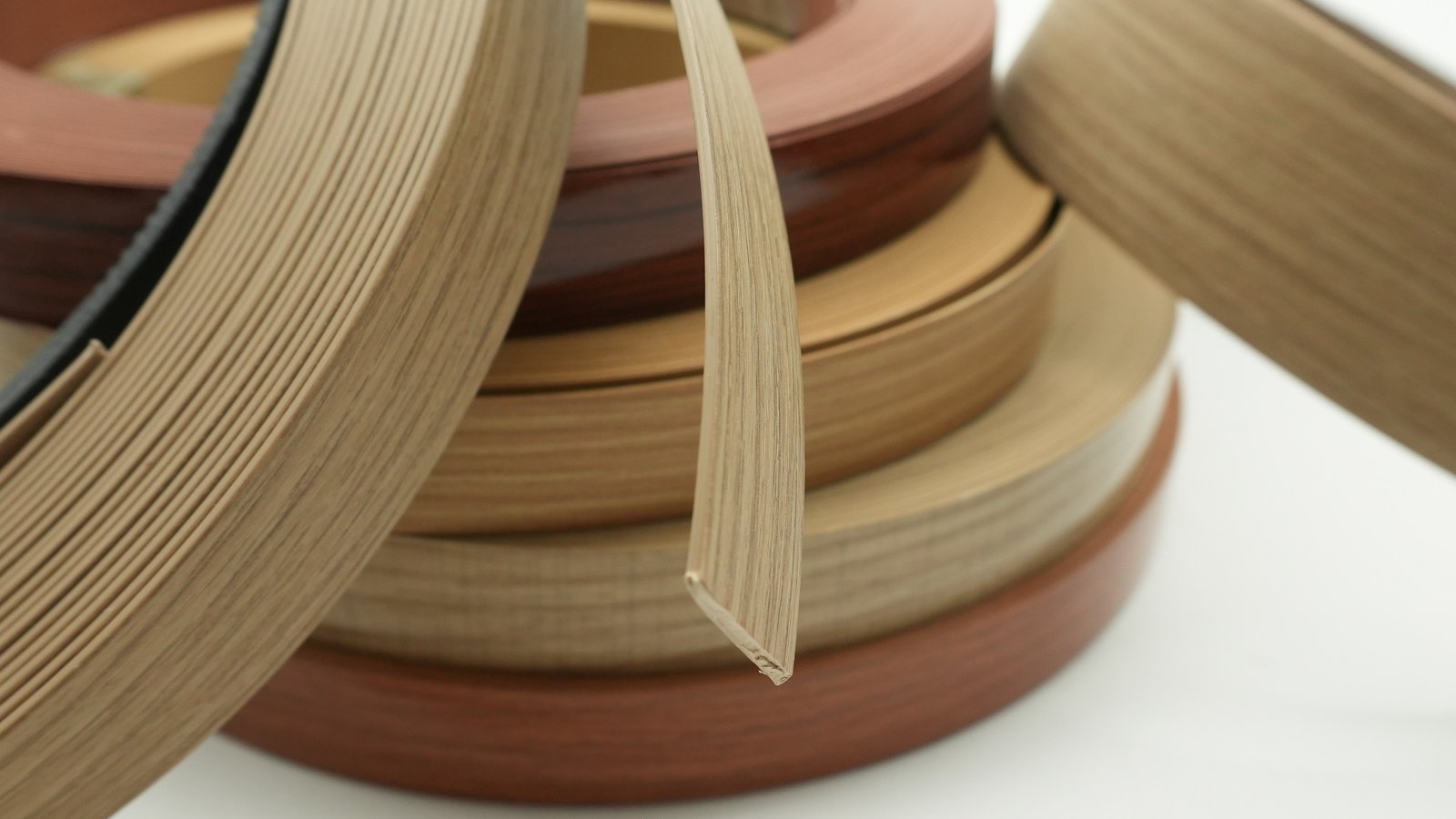
Comparing PVC vs ABS edge banding, durability is a critical factor to consider, especially in furniture that is used often, hits hard surfaces, and experiences high humidity and temperature changes. But there isn’t one material more durable than the other in all aspects.
Impact Resistance and Everyday Wear
Desk corners, cabinet fronts, table edges and furniture edges experience repeated knocks and rubbing. A good edge band should resist cracking, chipping and excessive wear under these conditions.
Heat Resistance
ABS is one material that can be advantageous in terms of resistance to heat. The Vicat softening temperature is higher for the ABS product, as shown in the technical data above, when compared to the PVC product. This means that it will melt at a higher temperature under the given test conditions.
The difference may be important if a piece of furniture is placed in a warmer environment. Vicat temperature is not the maximum operating temperature for the final product however, actual performance is also related to the properties of the adhesive and bonding conditions.
Scratch and Surface Resistance
Scratch and abrasion resistance is dependent on both the substrate and surface finish. The surface coating, texture and the amount of gloss can have an impact on the maintenance of an edge in normal use. With good formulation, PVC and ABS can provide good surface durability.
In general, ABS is thought to be more suitable when a higher softening temperature is wanted, but it is not necessarily more impact or scratch resistant. The decision should be based on the desired furniture application and which of the durability properties are important.
PVC vs ABS Edge Banding: Which Looks Better?
As for appearance, neither PVC nor ABS has a clear edge. Available in solid colors, wood-grain, matte and high gloss finishes, depending on the manufacturer, both materials can be produced. The final surface appearance is highly dependent on the decorative design, surface treatment and the processing quality.
The edge banding’s appearance after cutting and finishing is one of the key considerations. Where the edge of furniture is cut or shaped, uniform colour is important for maintaining a uniform appearance on furniture with rounded corners or curved edges. This may be provided by either PVC or ABS products, and should be evaluated on a product-by-product basis, rather than relying on the material type.
Surface finish also plays a part in the overall finish. Some finishes are more matte and textured, which can provide a more subdued look, and some are more high gloss, which accentuate reflections and surface details. For example, slight variations in processing quality, color or gloss in furniture may be more apparent on a dark or shiny material. Pattern and grain direction should be considered with wood-grain designs to create a visually cohesive edge.
For most furniture uses the highest quality product will be the one that most closely matches the desired panel finish. PVC and ABS can both provide handsome looks; the quality of the edge banding and its suitability to the furniture design is more important than the name of the material.
PVC vs ABS Edge Banding: Which Is More Environmentally Friendly?
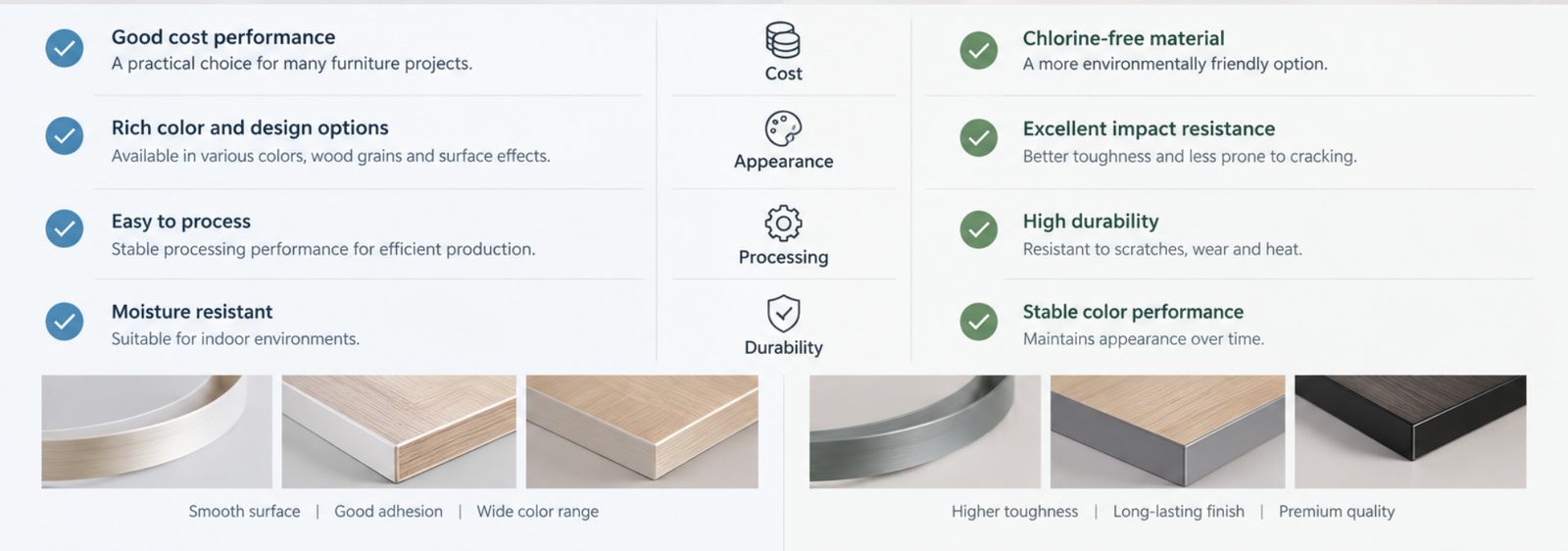
ABS is one clear winner when it comes to environmental comparisons with PVC edge banding; ABS does not have chlorine as part of its polymer chain. This doesn’t automatically mean that it’s more eco-friendly in total though.
This difference is more interesting if viewed through the lens of carbon emissions. The WorldAutoSteel/UCSB Automotive Energy & GHG Model has a published resin production dataset, which puts the CO₂e at around 2.21 kg CO₂e per kg for PVC resin, and 3.35 kg CO₂e per kg for ABS resin. Based on these data assumptions, green house gas emissions in the production stage are lower for PVC. These statistics are on resin production, not on the full production of edge banded products.
Another area for PVC is with its additives and end-of-life disposal, which can be of concern to the environment and health if certain formulations are used. Unlike chlorine, ABS is not a petroleum derivative, but like all plastics, it has its own production and waste problems.
So, which material is more environmentally friendly? Avoiding the use of chlorine is an important factor, so ABS might be the better choice, while PVC might have a lower carbon footprint at the resin production stage. In addition, manufacturing processes, product life cycle, additives and recycling must be taken into account for overall environmental performance.
Which Is the Better Choice for Different Furniture Applications?
The best choice between PVC and ABS edge banding depends on the type of furniture, how its edges are used, and the material requirements of the project.
Wardrobes, bookshelves, and standard desks: PVC is often a practical option for these applications, where manufacturers need consistent decorative finishes and cost-effective production. Its wide range of colors, wood-grain patterns, and thicknesses makes it suitable for many conventional furniture designs.
Office desks and frequently used tables: Furniture edges in these applications may experience repeated knocks and surface wear. Rather than assuming ABS is more durable, compare the actual impact strength, thickness, and surface properties of the products. The edge design and quality of application also affect long-term performance.
Furniture with rounded corners or complex profiles: Both PVC and ABS can be suitable for shaped edges. The important consideration is whether the material maintains a consistent appearance after trimming and milling, particularly on curved corners and visible edges.
Furniture with specific material or heat requirements: ABS is worth considering when a project requires chlorine-free material or a product with a higher specified softening temperature. However, these characteristics should be verified against the relevant technical data rather than assumed for every ABS product.
For most furniture manufacturers, PVC offers a practical solution for many standard applications, while ABS becomes more relevant when a project has specific material or performance requirements. The right choice is the one that meets the demands of the finished furniture without compromising appearance or paying for properties the application does not need.
Conclusion
When comparing PVC vs ABS edge banding, PVC is often a cost-effective choice for standard furniture production, while ABS is worth considering for chlorine-free material requirements or specific performance needs.
The best option depends on your furniture application, required durability, and production conditions. Choosing the right material ensures a balance between appearance, performance, and cost.If you’re looking for the right edge banding for your furniture projects, contact our team to discuss your requirements and explore suitable options.