



What Is Edge Banding?
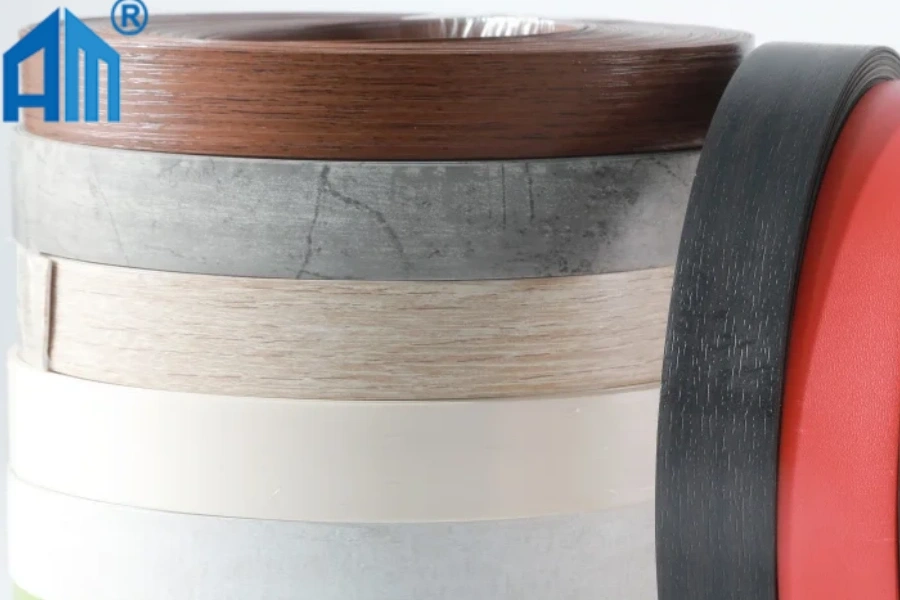
Edge banding is a narrow strip of material applied to the exposed edges of furniture panels to cover the raw core, improve appearance, and help protect the edges from everyday wear.
When MDF, particleboard, or plywood is cut to size, its exposed edges can look unfinished. Edge banding covers these areas with a decorative and functional strip that matches or complements the panel surface.
You can find edge banding on kitchen cabinets, wardrobes, office desks, shelves, drawers, and many other types of panel furniture. Depending on the design and performance requirements, it can be made from PVC, ABS, melamine, acrylic, or wood veneer.
Edge banding is available in different thicknesses, widths, colors, and surface finishes. For example, published PVC edge banding specifications commonly include thicknesses ranging from approximately 0.4 mm to 3.0 mm, although availability depends on the supplier and product range.
Choosing the right edge banding involves more than matching a color. The panel material, intended application, dimensions, adhesive system, and processing equipment all affect the final result.
Why Is Edge Banding Important?
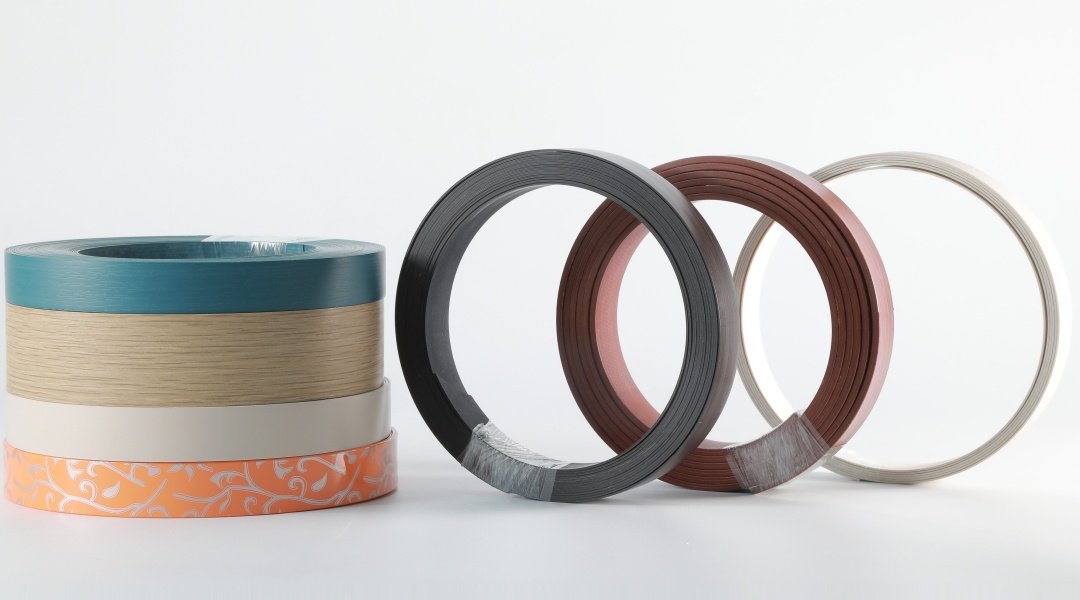
Edge banding serves three main purposes in furniture manufacturing.
1. Improving Appearance
Cut edges expose the internal structure of the panel, which may look different from its decorative surface. Edge banding covers this core and creates a cleaner finish.
A suitable color, pattern, and texture can help the edge blend with the panel. This is particularly important for visible components such as cabinet doors, wardrobe panels, and office desktops.
2. Helping Protect Exposed Edges
Furniture edges may experience impact, friction, and frequent handling. Edge banding adds a protective layer that helps reduce chipping and everyday surface damage.
It can also help limit direct moisture exposure to the exposed panel core. However, edge banding does not make the entire panel waterproof. Moisture resistance depends on the substrate, adhesive bond, panel construction, and installation conditions.
3. Supporting Consistent Production Quality
In furniture production, defects such as peeling, uneven trimming, visible gaps, and mismatched colors can affect the appearance of finished products.
Selecting compatible materials and maintaining suitable processing conditions helps manufacturers achieve more consistent results across production batches.
What Are the Different Types of Edge Banding?
The main materials are PVC, ABS, melamine, acrylic, and wood veneer. Each has different characteristics and is suitable for different requirements.
| Material | Main characteristics | Common applications |
| PVC | Flexible, versatile, with a wide choice of colors and finishes | Cabinets, wardrobes, shelving, and general furniture |
| ABS | Thermoplastic material without chlorine in its polymer structure | Furniture projects with specific material requirements |
| Melamine | Paper-based material impregnated with melamine resin | Melamine-faced boards and cost-conscious furniture |
| Acrylic | Decorative appearance, including high-gloss and reflective finishes | Contemporary cabinets and display furniture |
| Wood veneer | Natural wood appearance and grain | Veneered panels and furniture with timber finishes |
PVC is a versatile option for many general furniture applications. ABS may be preferred when particular material requirements apply. Melamine is often considered for economical panel finishing, while acrylic suits designs that emphasize gloss and reflectivity. Wood veneer is appropriate when a natural wood appearance is required.
There is no single material that is best for every project. The right choice depends on the desired appearance, expected use, processing conditions, and budget.
What Are the Common Sizes?
Thickness and width are two important specifications when choosing edge banding. They affect the finished appearance, edge coverage, processing, and suitability for different furniture components.
Common Thickness Options
Published supplier specifications include thicknesses such as 0.4 mm, 0.6 mm, 0.8 mm, 1.0 mm, 1.5 mm, 2.0 mm, and 3.0 mm.
The following table provides a practical starting point rather than a universal selection rule.
| Thickness | Typical consideration |
| 0.4–0.6 mm | Thin, economical edging for suitable low-impact applications |
| 0.8–1.0 mm | A practical range to consider for general cabinets and furniture |
| 1.5–2.0 mm | A more substantial edge for applications requiring additional edge protection |
| 3.0 mm | Specialized applications where the design and processing equipment support thicker edging |
Thicker edge banding may provide greater resistance to edge impact, but it is not automatically the best choice. Material properties, furniture use, edge profile, and machine compatibility must also be considered.
Common Width Options
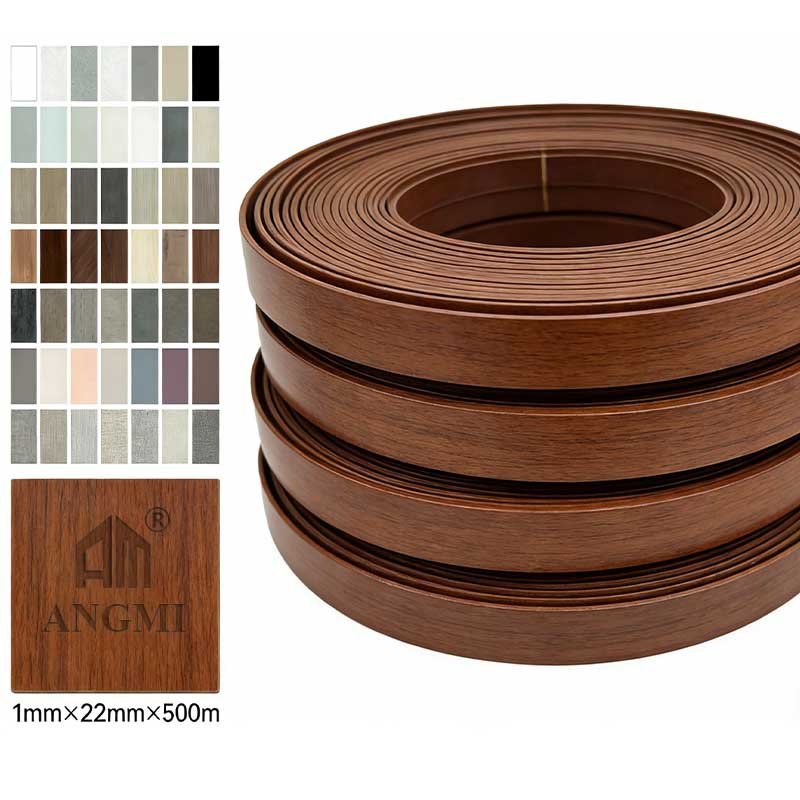
PVC edge banding suppliers publish standard widths such as 19 mm, 22 mm, 25 mm, 28 mm, 35 mm, 42 mm, and 54 mm. Other widths may be available depending on the material and supplier.
The required width depends on the panel thickness and the allowance needed for trimming.
For example, Unilin’s decorative panel processing guidance recommends allowing an additional 5 mm of edge banding width for trimming. Under that guidance, an 18 mm panel would use 23 mm edge banding.
This is a useful starting example, not a fixed rule for every machine or application. Actual dimensions, trimming requirements, and equipment settings should be checked before production.
What Tolerances Should Buyers Check?
Nominal dimensions alone do not tell you how consistent a product must be.
One published PVC edge banding specification lists thickness tolerances of ±0.05 mm for 0.4–0.7 mm material and ±0.10 mm for 0.8–1.5 mm material. Tolerances for other thicknesses and widths can differ between suppliers.
When comparing specifications, confirm the nominal thickness, nominal width, permitted variation, and agreed inspection method. These details are especially important when the material must fit an established production process.
Where Is Edge Banding Used?
Edge banding is commonly used on furniture made from MDF, particleboard, plywood, and other panel materials.
Kitchen cabinets: Cabinet doors, shelves, drawer components, and side panels use edge banding to create a finished appearance and help protect exposed edges during daily use.
Wardrobes and closets: Edge banding coordinates the visible edges of wardrobe doors, shelves, and internal panels with the board surface.
Office furniture: Desks, workstations, storage units, and shelving often require finished edges that can withstand repeated contact and routine handling.
Retail and commercial furniture: Display units and commercial interiors may require specific colors, textures, or gloss levels to match a design scheme.
Residential furniture: Bookcases, TV cabinets, drawers, tables, and other panel-based products use edge banding to cover exposed cores and improve the overall finish.
The appropriate specification depends on the furniture’s intended use. A bedroom wardrobe shelf and a heavily used commercial work surface may have different requirements for edge thickness, impact resistance, and appearance.
How Is Edge Banding Applied?
Edge banding can be applied manually or with an automatic edge banding machine. The process depends on the material, adhesive system, production volume, and available equipment.
The typical process includes five steps.
- Prepare the panel edge:The cut edge should be clean and suitable for bonding. Dust, contamination, or an uneven cut may affect adhesion and finishing quality.
- Select the adhesive system:Some products are supplied with adhesive, while others require separately applied hot-melt adhesive. The adhesive must be compatible with the edge banding, substrate, and application process.
- Apply the edge banding:The strip is positioned against the panel edge and bonded using the appropriate application method.
- Trim the excess material:After application, excess width is removed to achieve the required finished edge. The trimming setup should be compatible with the material thickness.
- Inspect the result:Check bonding, alignment, trimming quality, visible gaps, glue marks, scratches, and color consistency.
What Processing Parameters Matter?
For machine-applied edge banding, adhesive temperature and panel feed speed are important variables.
As one manufacturer-published reference for EVA edge banding adhesive, the recommended glue-pot temperature is 170–190°C, roller temperature is 180–200°C, and panel feed speed is 10–30 m/min. Its corresponding PUR guidance specifies a glue-pot temperature of 120–140°C and feed speeds of 8–25 m/min.
These figures are examples from a particular supplier’s processing guidance, not universal settings. The actual operating parameters depend on the adhesive grade, machine design, edge banding material, substrate, and production conditions. Always follow the technical data for the products being used.
Incorrect settings or incompatible materials can contribute to peeling, glue-line problems, or poor trimming. When changing suppliers or materials, test the combination under actual production conditions.
How Do You Choose the Right Edge Banding?
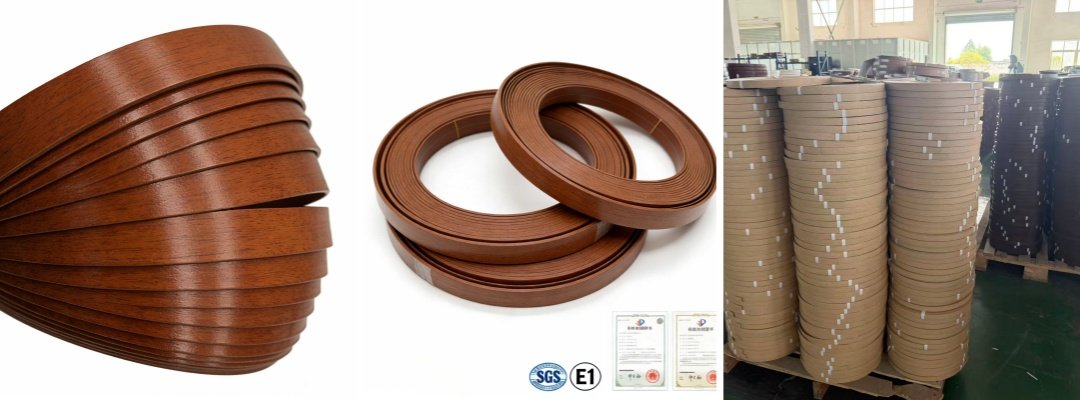
If you are sourcing edge banding for furniture production, consider the following factors before confirming a specification.
1. Identify the Panel Material
Confirm whether the substrate is MDF, particleboard, plywood, or another board. Its edge structure and surface condition influence bonding, so the edge banding and adhesive should suit the actual substrate.
2. Consider the Application
Think about how the finished furniture will be used. A wardrobe shelf may need different edge protection from a frequently handled cabinet door or a work surface exposed to repeated impact.
Consider cleaning, humidity, expected wear, and the appearance requirements of the finished product.
3. Confirm Thickness, Width, and Tolerances
Specify the dimensions required for your panel and equipment. Do not select width based on panel thickness alone; allow for the trimming process.
Also confirm dimensional tolerances in writing. Even small differences may matter when a material needs to run consistently through an existing production line.
4. Match the Color and Surface Finish
Compare the edge banding with the actual panel, including color, grain pattern, texture, and gloss level. A digital image may not accurately represent the finished appearance under production or installation lighting.
For custom colors or decorative surfaces, request samples before approving the final specification.
5. Check Equipment and Adhesive Compatibility
Confirm whether the edge banding will be applied manually or by machine, and whether the adhesive is pre-applied or supplied separately.
Material changes may require adjustments to processing conditions. Check compatibility before running a large production batch.
6. Test Before Bulk Production
Request a sample and test it using the intended panel, adhesive, and equipment. Evaluate bonding, trimming, appearance, and dimensional accuracy.
For repeat orders, keep the approved sample and written specification as references. This makes it easier to identify changes in material dimensions, color, or processing results.
Frequently Asked Questions
Is Edge Banding the Same as Edging?
The terms are often used interchangeably in furniture manufacturing. Edge banding usually refers to the strip applied to a panel’s exposed edge, while edging can have a broader meaning depending on the industry.
What Is the Most Common Edge Banding Material?
PVC is widely used in general furniture and cabinet applications because of its versatility and range of finishes. ABS, melamine, acrylic, and wood veneer may be better suited to projects with specific material, appearance, or budget requirements.
Is Edge Banding Waterproof?
PVC, ABS, and acrylic offer good moisture resistance and help protect exposed panel edges from water. However, overall water resistance depends on the adhesive and sealing quality.
Can Edge Banding Be Used on MDF and Particleboard?
Yes. MDF and particleboard are common substrates for edge banding. Select the material and adhesive according to the substrate, intended use, and processing method.
Why Does Edge Banding Peel Off?
Peeling may result from contaminated panel edges, unsuitable adhesive, incorrect temperature or pressure, or incompatible materials. Inspect the whole application process before changing the edge banding specification.
How Do I Choose the Correct Edge Banding Thickness?
Start with the furniture application, required edge profile, expected impact, and available equipment. Thicknesses such as 0.8–1.0 mm and 1.5–2.0 mm can serve as initial options for evaluation, but the final specification should be confirmed through testing.
Final Thoughts
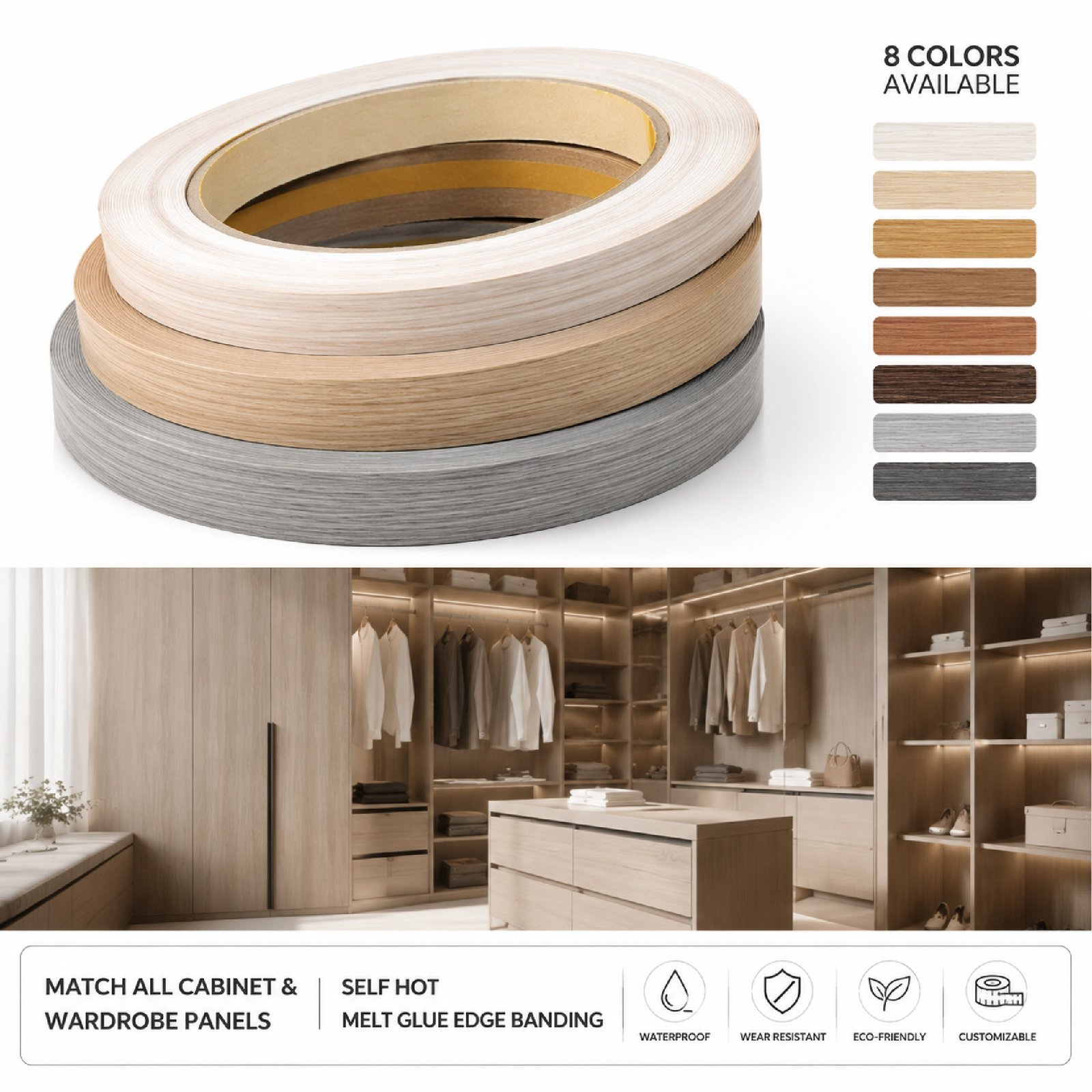
Edge banding covers exposed panel edges, improves furniture appearance, and helps protect edges from everyday wear. The right choice depends on material, dimensions, application, adhesive compatibility, and processing conditions.
Before placing a bulk order, confirm the technical specifications, compare samples with the actual panel, and test the material under the intended production conditions. This helps ensure that the selected edge banding meets both the appearance and practical requirements of the finished furniture.